Are Teva Sandals Good for Plantar Fasciitis? (2026 Honest Review)
Are Teva Good for Plantar Fasciitis? A Wide-Foot Hiker’s Honest Review
Direct Answer
Tevas can work for plantar fasciitis, but with caveats. Their arch support is modest—fine for casual wear, potentially risky for hiking with PF. Look for Teva models with higher arch support (like the Ember Moc or Voya Infinity) or consider brands offering deeper heel cups and firmer midsoles. Wide-foot PF sufferers need extra cushioning, not just width.
Expanded Answer
We’ve tested Tevas for both casual hiking and all-day wear, and here’s what we’ve found: Teva’s reputation for comfort is earned, but their plantar fasciitis credentials are mixed.
Tevas excel at breathability, weight, and fitting wider feet without that squeezed-toe feeling. Their sandals and lighter shoes have legit wide options (especially their W-sized straps and footbeds). But plantar fasciitis demands specific architectural support that many Teva models simply don’t deliver.
The problem: Teva’s standard EVA footbeds are relatively flat. They provide cushioning, but not the aggressive arch support and heel cup depth that PF sufferers need to reduce tension on the plantar fascia. When our team wore standard Teva sandals, they noticed their PF flared within 2–3 days, despite their general comfort.
Where Tevas get it right:
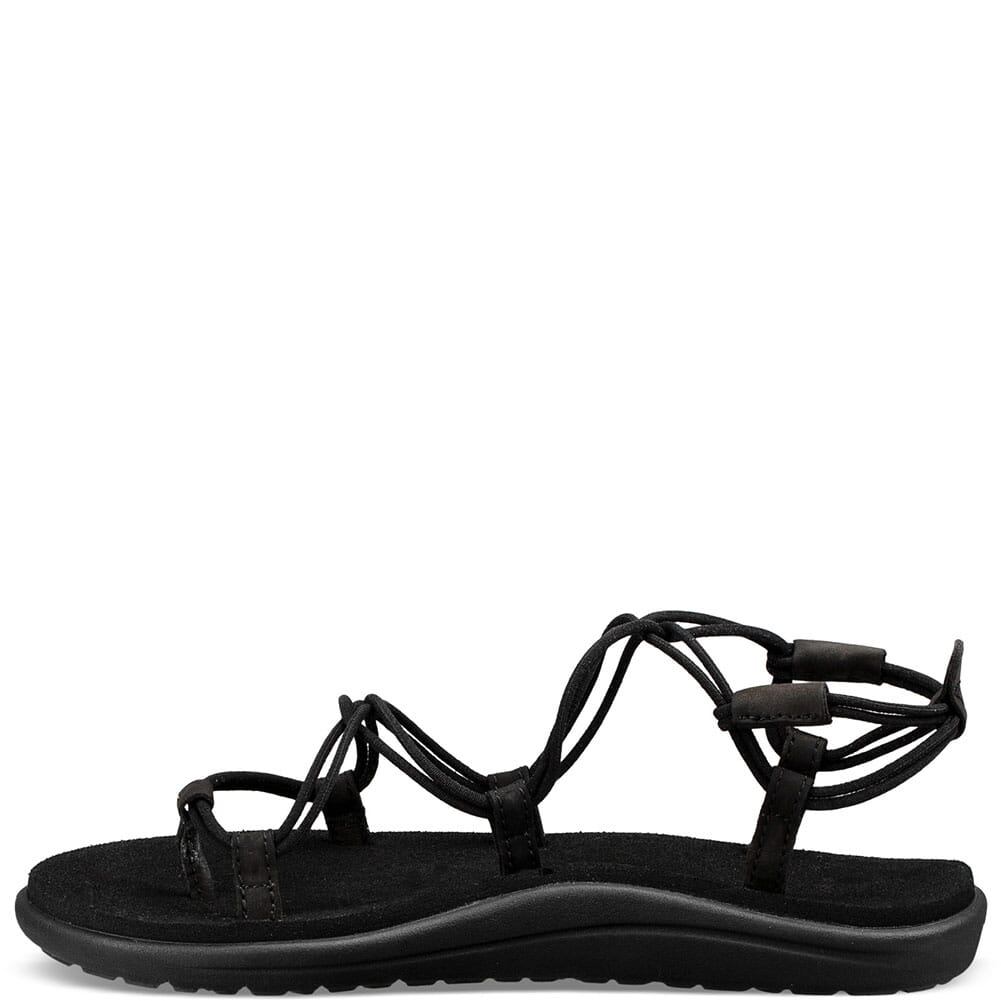
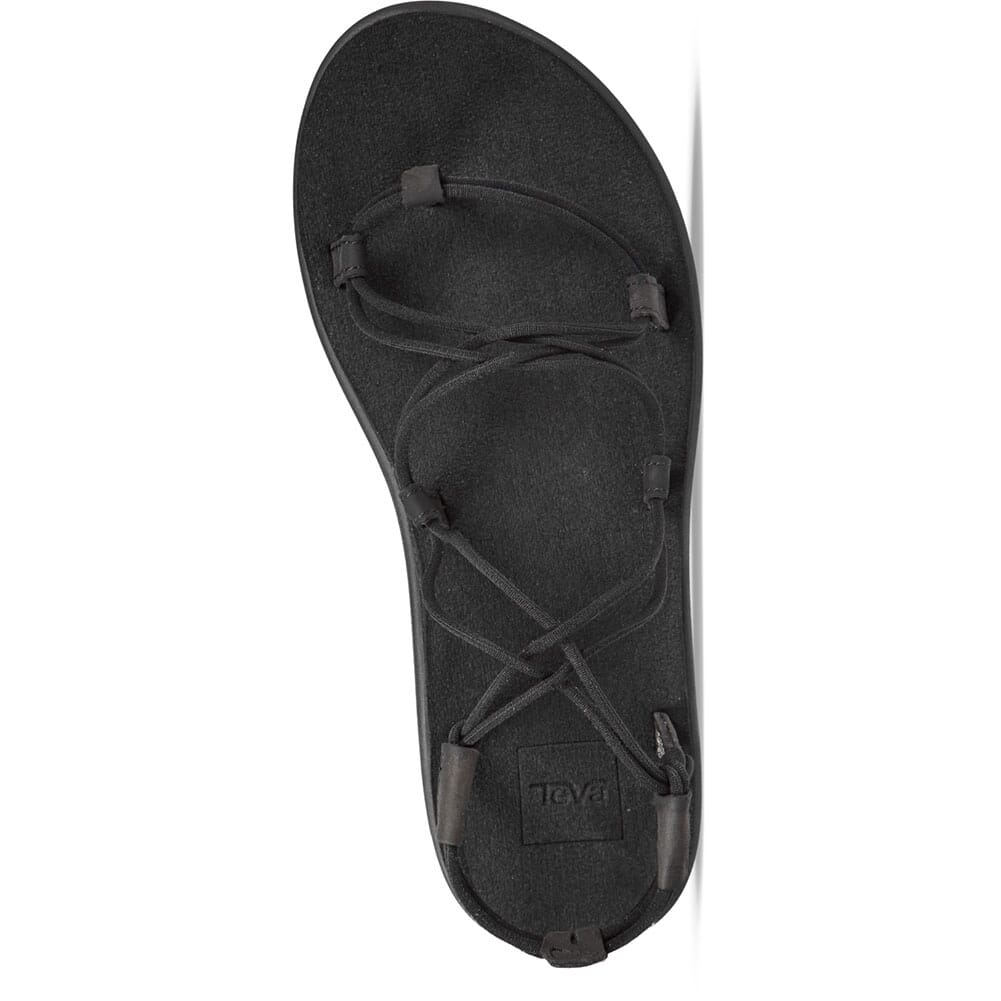
Some newer models integrate better arch geometry. The Ember Moc and Voya Infinity have more structured insoles and slightly deeper heel cups than classic Tevas. We’ve also found that aftermarket insoles (like Superfeet or Powerstep) can transform a standard Teva into a PF-friendly option—though this adds cost and bulk.
The wide-foot angle: Wider feet often mean lower arch volume, which compounds PF issues. You need both width and precision arch placement. Teva’s wide sizes solve width, but don’t always address arch engineering. This is why We recommend checking insole depth and arch prominence before buying—don’t assume width alone solves PF.
For committed hikers with PF and wide feet, I typically suggest brands with engineered PF support (like Hoka, Altra, or Salomon) paired with their wide-fit options, rather than forcing Tevas into a PF role they weren’t designed for.
Related Questions
Wide Foot Insider
Get boot reviews & fit guides in your inbox — free
What Teva Models Are Best for Plantar Fasciitis?
If you’re set on Teva, the Ember Moc and Voya Infinity are your strongest bets. The Ember Moc has a closed-toe design with a more contoured footbed and subtle arch support—better than sandals for PF. The Voya Infinity offers a hybrid approach with strappy coverage and a slightly firmer insole. Both come in wide widths.
That said, neither is engineered specifically for PF. We’d rate them as “acceptable for mild PF” or “manageable with orthotic inserts,” not “designed for plantar fasciitis.” If you’ve had moderate-to-severe PF pain, these alone won’t cut it.
The classic Teva sandals (Universal, Original Universal) are comfier for casual walking but worse for PF due to minimal arch engagement. Skip these if PF is a concern.
Should I Add Insoles to Our Tevas for Plantar Fasciitis?
Yes, absolutely. This is our go-to solution for Teva wearers with PF. High-quality orthotic insoles can transform a flat Teva footbed into a PF-supportive setup.
the most commons:
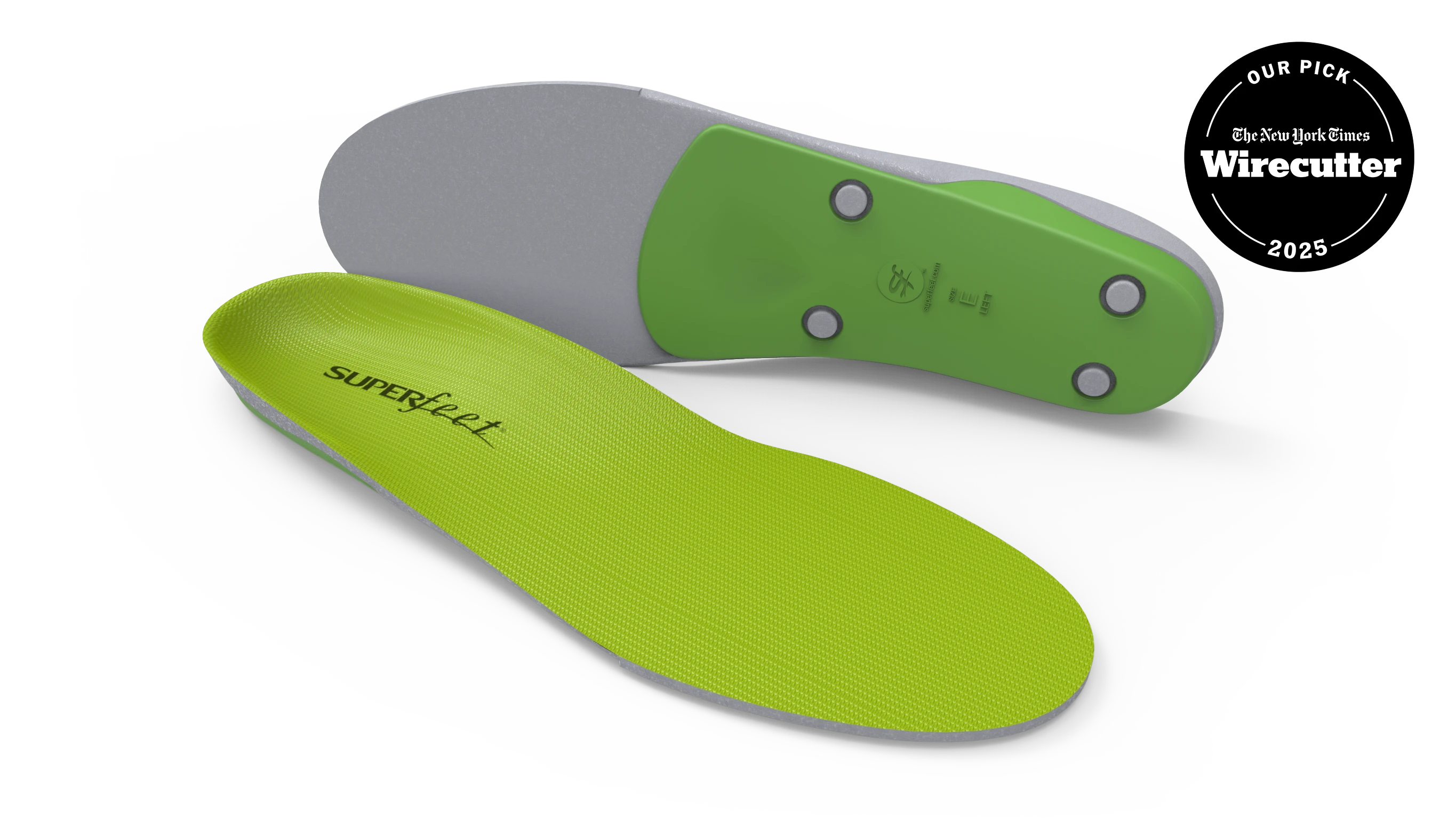
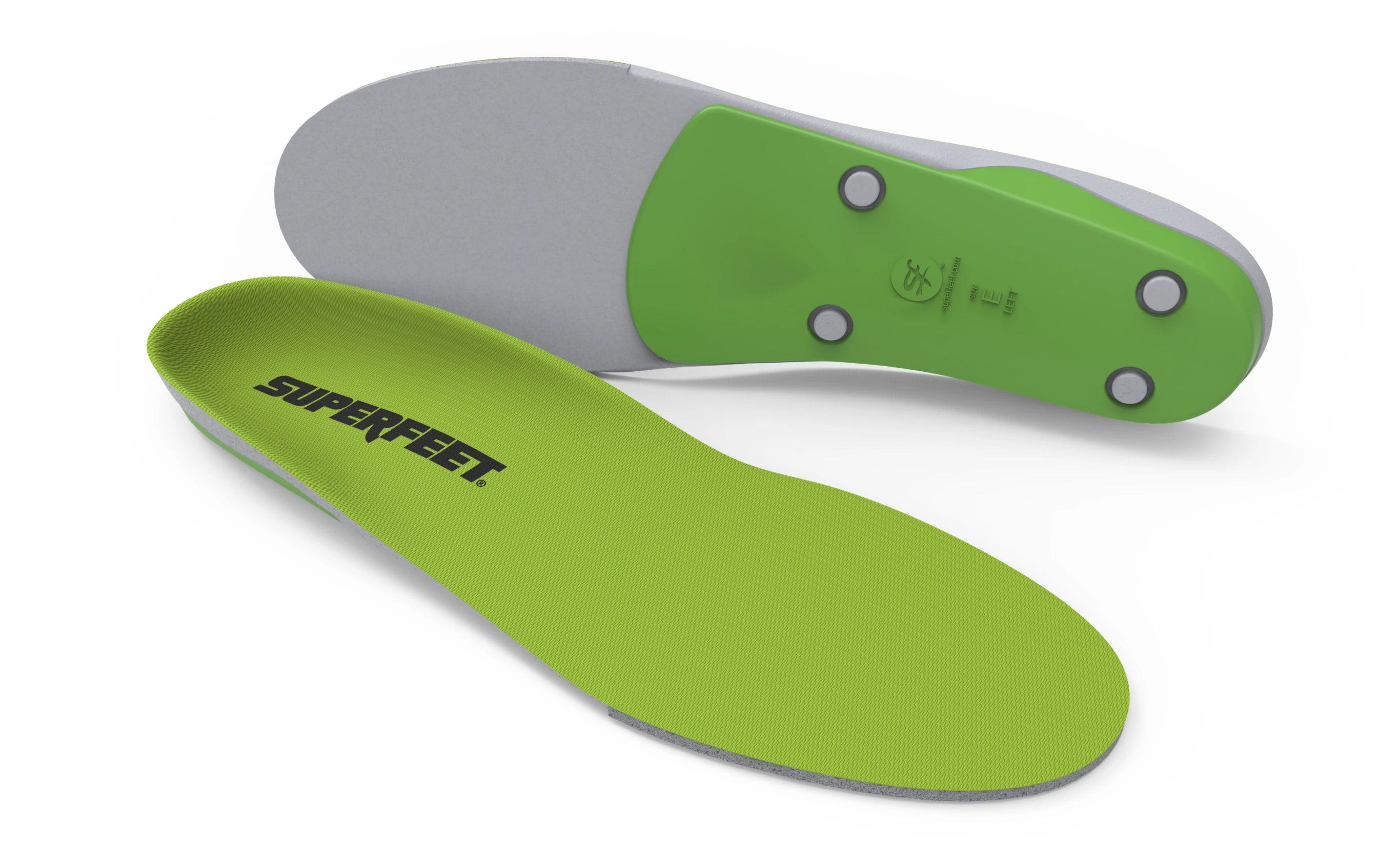
– Superfeet Green or Blue — excellent arch support, works in most Teva sandals and mocs.
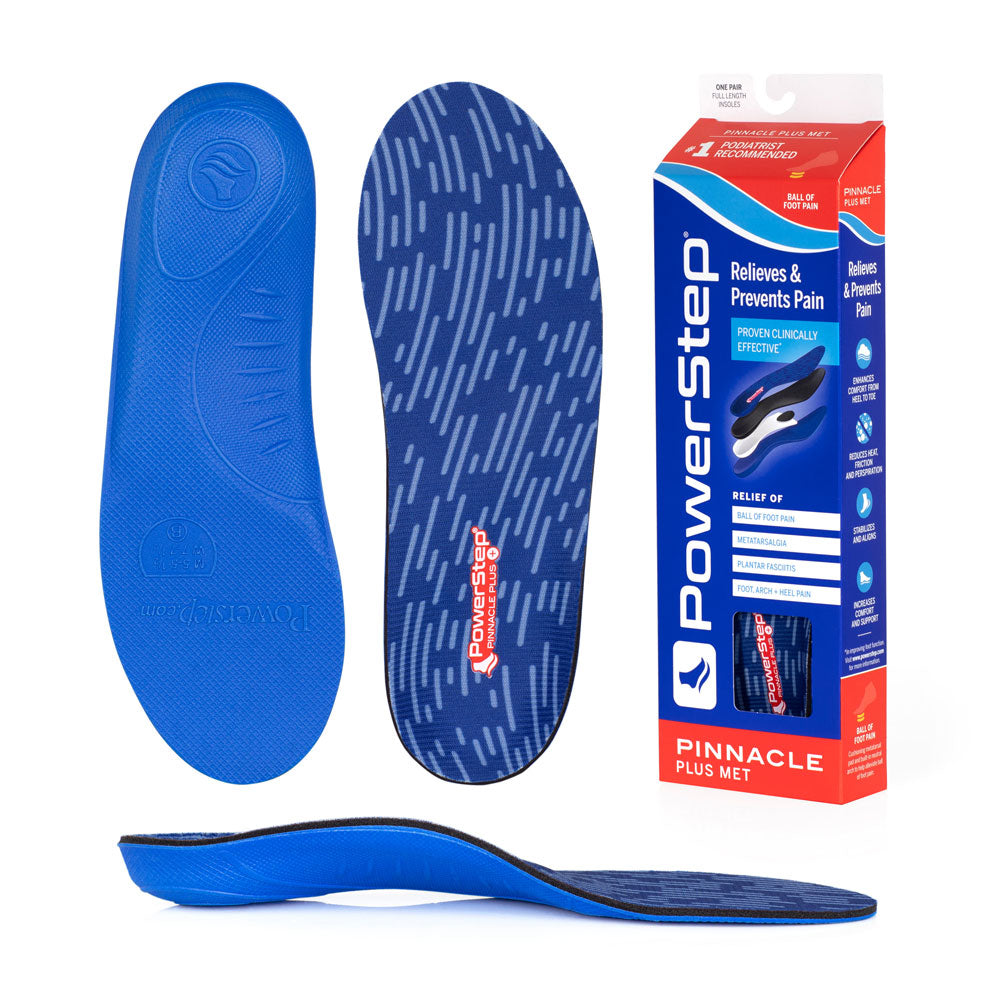
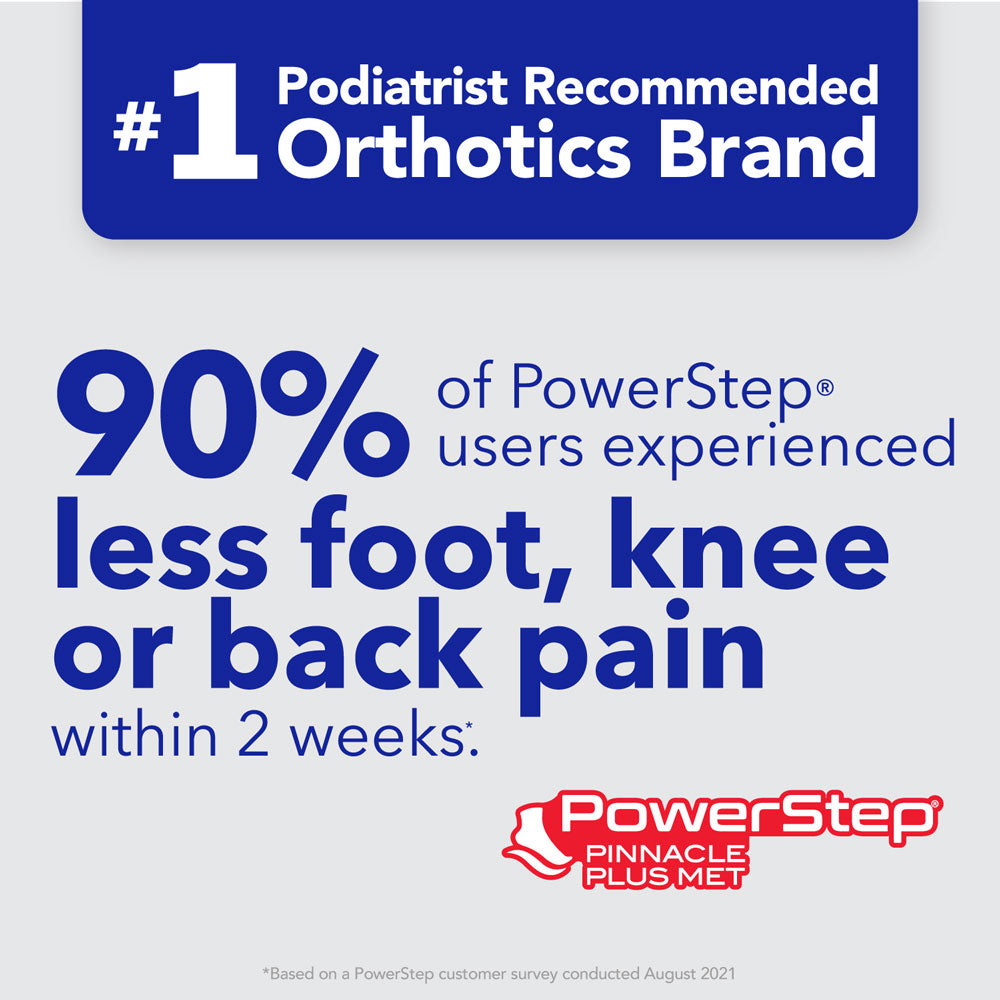
– Powerstep Pinnacle Plus — deeper heel cup, firmer arch, great for hiking.
– Vionic orthotics — designed with PF in mind, premium feel.
Budget ~$50–80 for quality insoles. This is cheaper than replacing shoes and often more effective than relying on the shoe’s stock footbed. We love Superfeet and find that they last the longest without compromising on comfort – it might a little extra out of the wallet but the relief you get is priceless.
Pro tip for wide feet: Insoles can feel bulkier in narrow shoes. Since Tevas run wide, there’s usually room to accommodate thicker orthotics without cramping. Measure your insert width before buying to confirm fit.
What’s the Difference Between Teva Sandals and Mocs for PF?
Sandals = Open-toe, strappy, minimal midsole structure. Great for air flow; poor for PF support. The arch has less material to work with, and your foot shifts more with each step.
Mocs = Enclosed toe, higher collar, thicker footbed. Better foot lockdown and arch stability. More insulation too, which matters on cooler hikes.
For PF specifically, mocs win. The enclosed design means better arch engagement and less compensatory foot rolling—both critical for PF management. A Teva moc with an aftermarket insole is usable for PF hiking.
We’ve worn the Ember Mocs on a few longer hikes, and the closed design kept the foot stable enough that pain stayed minimal. The same hike in Teva sandals would’ve been brutal.
Which Hiking Boots Are Better for Wide Feet + Plantar Fasciitis?
If Teva isn’t cutting it, consider these alternatives with better PF engineering and wide sizing:
- Hoka Speedgoat or Kaha — fantastic arch support, aggressive heel cup, available in wide widths. Gold standard for PF + hiking.
- Altra Lone Peak wide — zero drop (great for PF), roomy toe box, wide options. Different feel, but PF-friendly.
- Salomon X Ultra 4 Wide — supportive midsole, secure fit, available in wide. Excellent for longer hikes.
- Merrell Moab 3 Wide — durable, moderate arch support, affordable, true-to-size wide fit.





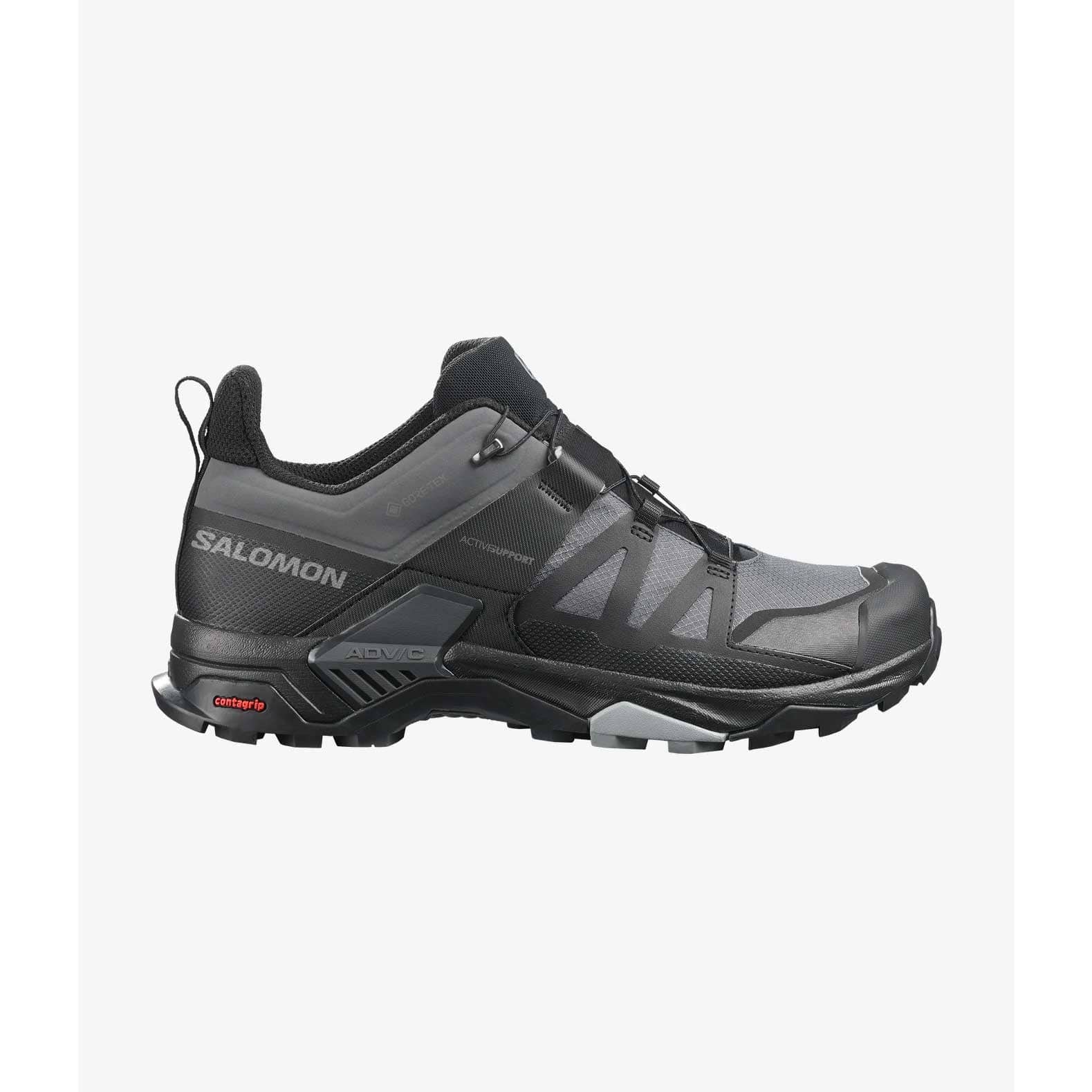
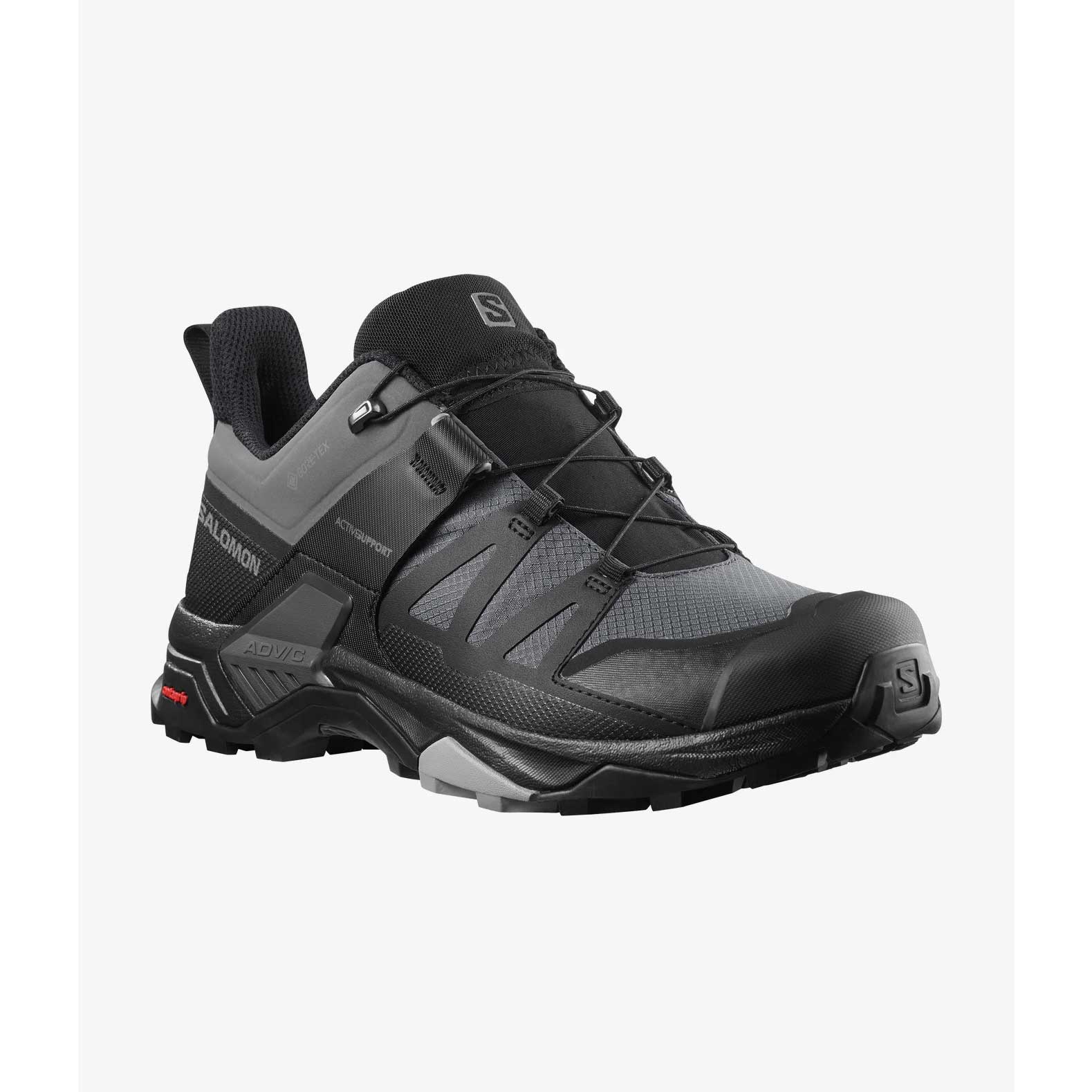

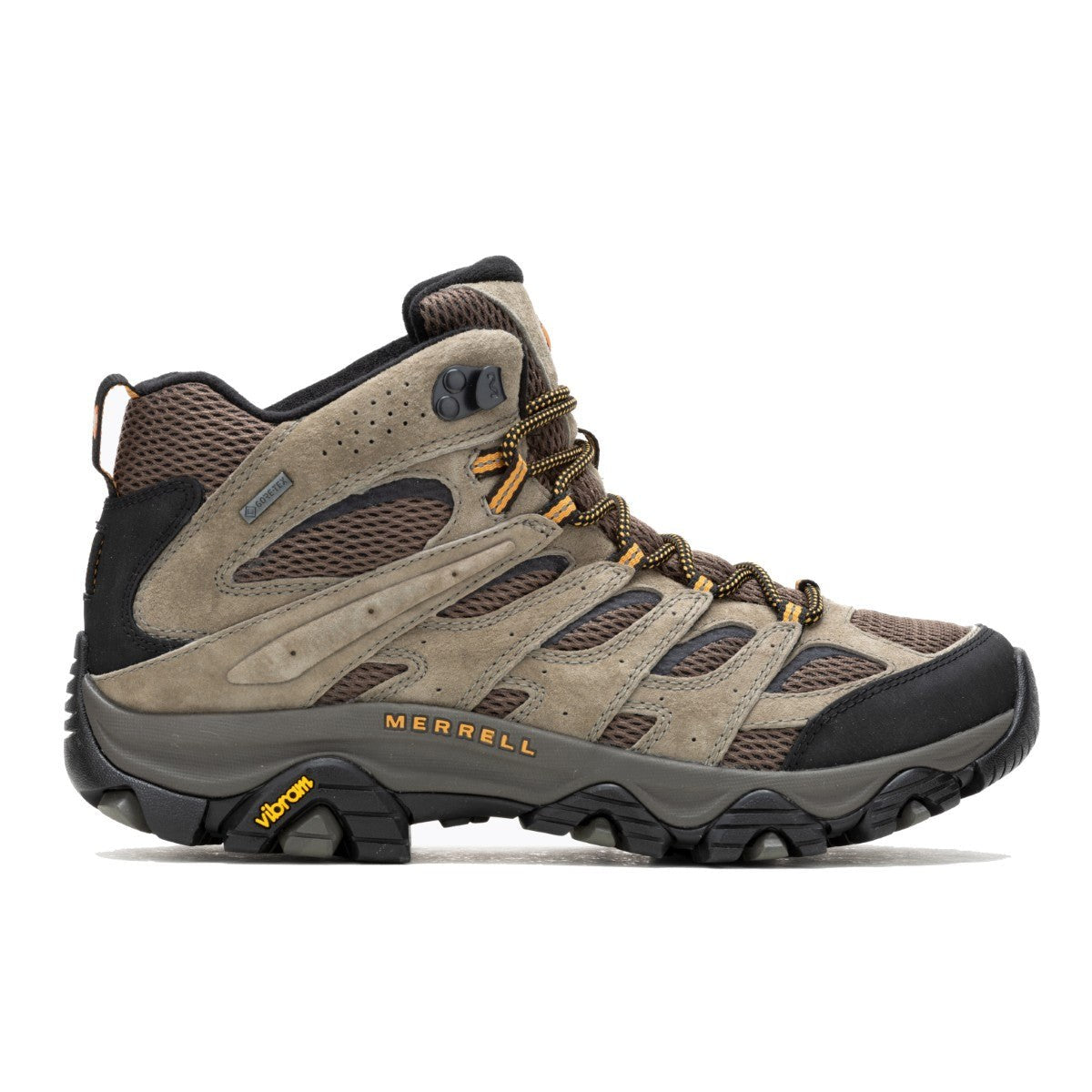
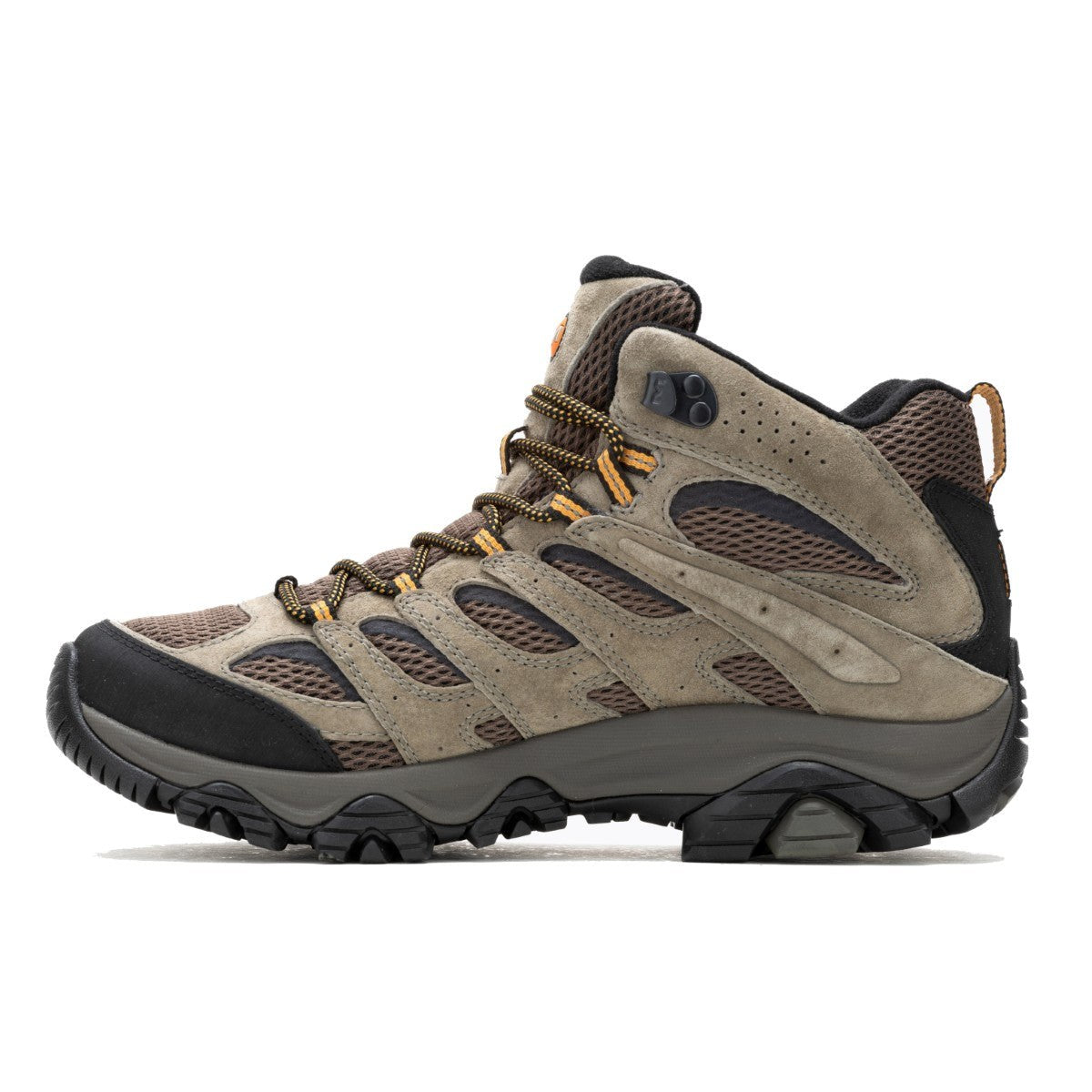

All of these have better arch geometry than stock Tevas and come in genuine wide sizes. You can log hundreds of miles in Hokas or Salomons, but we can’t wholeheartedly say the same for Tevas.
Can I Wear Teva Sandals on Day Hikes with Plantar Fasciitis?
Short answer: depends on severity. For mild PF (occasional soreness, not limiting), Teva sandals with Superfeet insoles can work on shorter trails (under 4 miles, flat-to-moderate terrain).
For moderate-to-severe PF (constant pain, affecting daily walking), sandals aren’t safe, even with insoles. The open design limits foot stability, and sandals don’t provide the heel-to-toe support your arch needs during impact.
One of our team members tested Teva sandals + Superfeet on a mild PF day. Pain was acceptable. But on a steeper hike? You can expect arch flareups after a few miles; the cumulative impact and foot shifting was too much.
Better approach: Reserve sandals for camp/town wear. Use mocs or real hiking boots for trails.
How Do Teva Widths Compare to Other Brands?
Teva’s wide sizing is generous. A Teva W10 fits noticeably wider than a Salomon W10 or Merrell W10. This is why Tevas are popular among wide-foot hikers—they deliver actual width without the premium pricing of specialty brands.
The catch: Width isn’t the same as PF support. We have a 2E-3E foot, and Tevas fit Our toe box perfectly. But their standard arches are built for normal-to-high-arch feet, leaving Our flatter, wider foot under-supported.
For wide + low arch + PF, I typically layer: Teva-width sandal + Powerstep insole. This gives me the comfort of a generous toe box plus custom arch support. It’s a workaround, but it works.
What’s Your Go-To Setup for PF + Wide Feet + Hiking?
Honest answer? Hoka Speedgoat in wide, with Superfeet insoles, on anything over 4 miles. This combo handles Our PF, Our width, and rugged terrain.
For casual day use or car camping: Teva Ember Moc in wide + Superfeet. Lightweight, packable, comfortable enough for short hikes and camp walks.
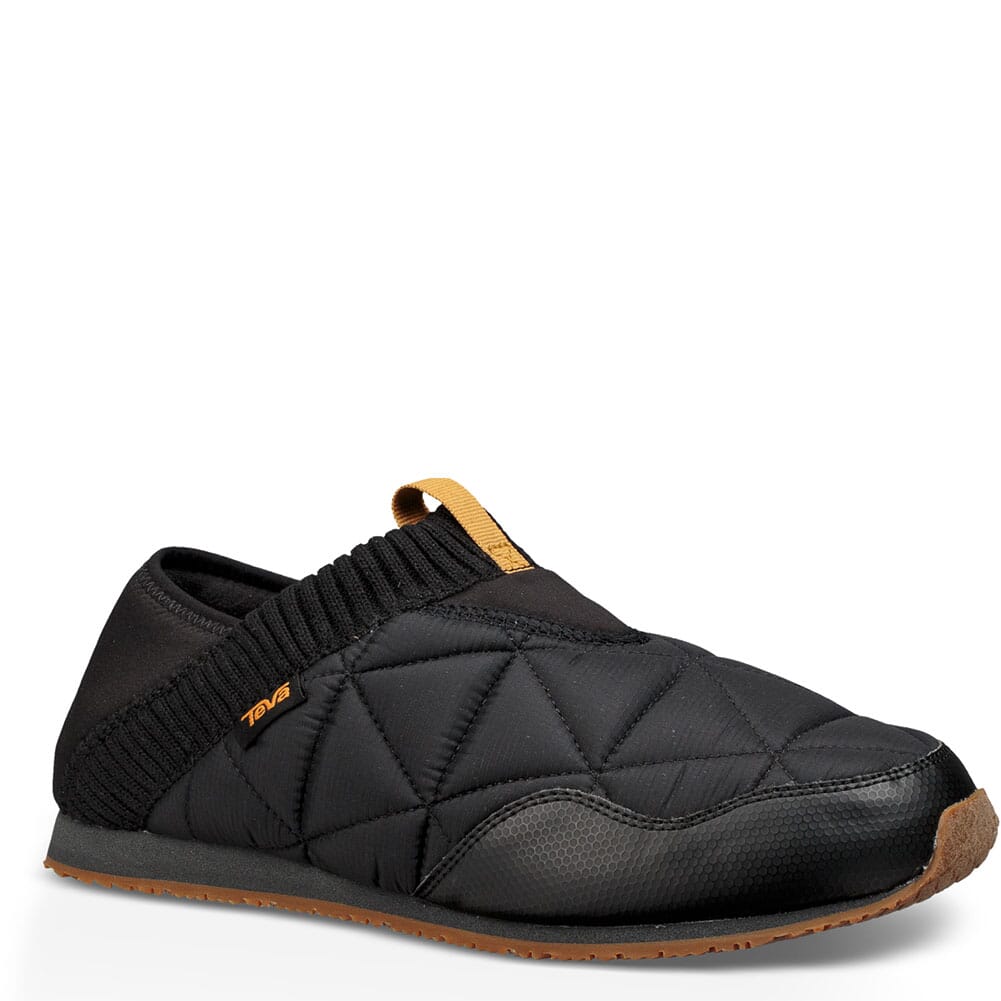
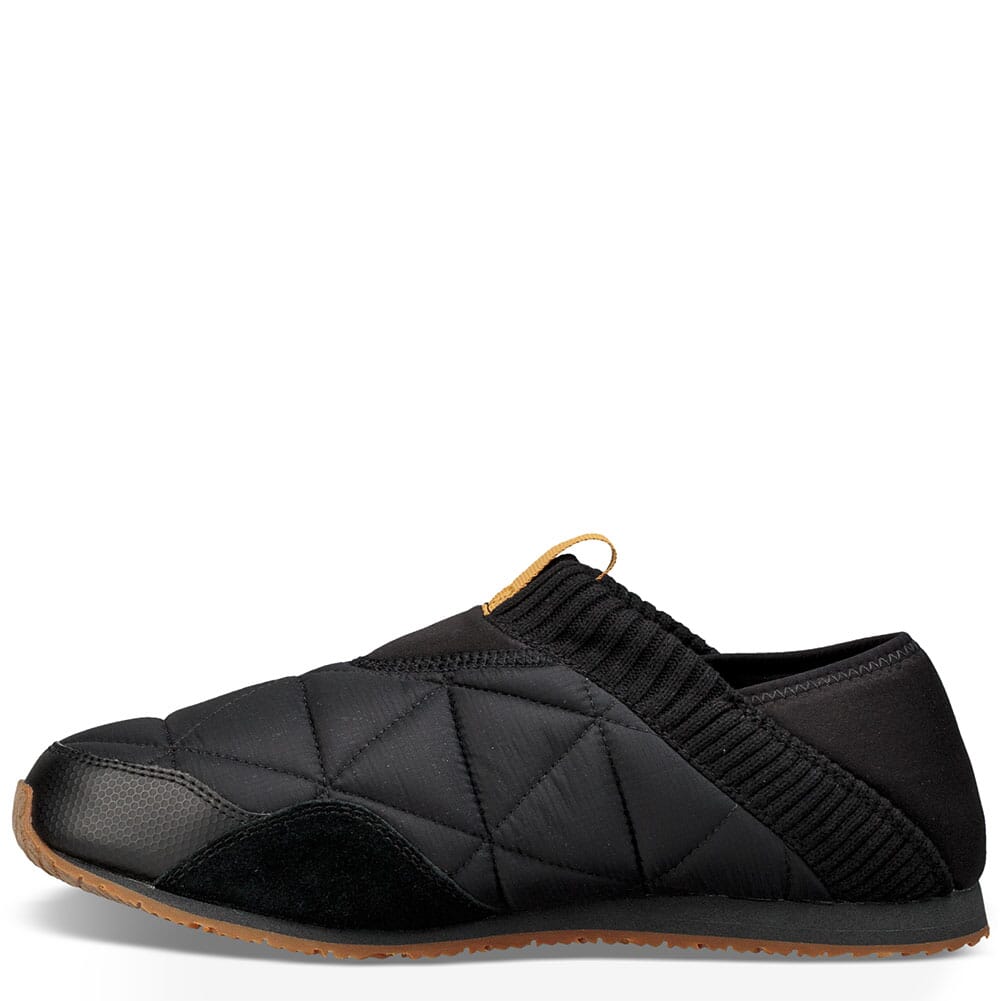
The Teva works because We’re not pushing it into serious hiking. It’s a solid secondary option, not a primary workhorse. Tevas are great shoes, but for PF + wide feet + real mileage, a dedicated support shoe wins.
Summary
Tevas aren’t designed for plantar fasciitis, but they can be adapted with the right insoles and expectations. For wide-foot hikers with PF, a Teva Ember Moc paired with Superfeet orthotics works for casual trails; for serious hiking, brands like Hoka or Salomon with engineered arch support deliver better results. Start with aftermarket insoles before switching shoes entirely—often the cheapest fix.