Hiking Boots for Women Wide Feet Beginner’s Guide
The Problem: Finding First Hiking Boots That Actually Fit

If you’re a woman with wide feet considering your first hiking boots, you’ve probably already discovered the frustrating truth: most mainstream hiking boots are designed for narrow to medium feet. You’re stuck either squeezing into boots that leave your feet numb by mile three, or settling for “wide” versions that still feel cramped across the toe box.
This guide cuts through that nonsense. We’ve tested dozens of hiking boots with wide feet, hiked thousands of miles in them, and We’re here to share exactly what works—and what doesn’t—for women new to hiking who need real width.
What You’ll Learn in This Guide
- How to actually measure your foot width so you stop guessing at shoe sizes
- The specific boot features that matter for wide feet (and which features don’t)
- Which brands make first hiking boots that won’t destroy your toes with recommendations you can buy today
- How to break in your first boots without ending up with blisters on your first real hike
Understanding Your Feet: Measurement Matters
Wide Foot Insider
Get boot reviews & fit guides in your inbox — free
The Standard Width System (And Why It’s Broken for Hikers)
Shoe width is measured in letters: B (narrow), C (medium), D (wide), E (extra wide), and EE (double extra wide). Most women’s hiking boots max out at D (wide). Here’s the thing: a D width in a hiking boot is not the same as a D width in a dress shoe.
To know what width you actually need, you need real measurements, not guessing.
How to Measure Your Foot Width at Home
- Get a piece of paper and a pen. Stand on it barefoot with your full weight on that foot.
- Mark the widest points of your foot on both sides (this is usually across the ball of your foot, not the heel).
- Measure the distance in millimeters between those two marks.
- Compare to this chart:
- Under 85mm = B/C width
- 85–92mm = D width (standard wide)
- 92–99mm = E width (extra wide)
- 99mm+ = EE width (double extra wide)
Most women with “wide feet” actually measure at 90–95mm, which puts them right at the D/E border. This is crucial information for boot shopping.
Pro Tip for Hiking Boots
Hiking boots fit differently than casual shoes. You need ½ to 1 full size larger than your street shoe size because your foot swells on the trail, and you need room for thick hiking socks. But that extra size shouldn’t come from cramming a narrow boot in a bigger size—it should come from getting a boot that’s already designed wide.
The Boot Features That Actually Matter for Wide Feet
1. Toe Box Width (Measured in Millimeters)
This is what separates boots that work from boots that pinch. When you’re shopping online or in a store, ask for the toe box width measurement across the metatarsal heads (the widest point inside the boot, roughly 1.5 inches from the toe).
- Under 95mm: Narrow/Medium. Skip these.
- 95–105mm: Standard Wide (D width). Good entry point for most.
- 105–115mm: Extra Wide (E width). For women measuring 92mm+ in foot width.
- 115mm+: Double Extra Wide. Less common, but some brands make them.
2. Midfoot Girth (Not Just Ankle Height)
The ankle cuff height is less important than how the boot hugs your midfoot. A narrow boot with a tall ankle cuff will still feel suffocating across the top of your foot. Look for boots with:
- Minimal padding or gussets across the midfoot (these compress wide feet)
- Lacing systems that let you loosen the midfoot while keeping the heel snug
- Structured but not heavily padded collars around the ankle
3. Heel-to-Toe Taper
Some boots taper dramatically from the midfoot toward the toe, which creates pressure on wide forefeet. Look for boots with a gradual, gentle taper. The toe box should feel roomy but not floppy.
First Hiking Boots for Women with Wide Feet: Real Recommendations

Best Overall: Salomon Quest Rove GTX (Women’s, Wide)
🏅 Best Overall: Salomon Quest Rove GTX (Women’s, Wide) — BroadToeBox Score
8.5
8.5
9.0
8.5
7.5
7.0
Why it works for wide feet: The toe box measures 104mm wide, which is spacious without being sloppy. The midfoot is reinforced but not constrictive. Most importantly, Salomon’s last (the mold they use to shape boots) is naturally wider than most brands.
Specs:
– Available in E width (extra wide)
– Insulated to -20°C (good for spring/fall hiking)
– Weighs 680g per boot
– MSRP: $180–200
Real feedback:Break-in was smooth with no hot spots reported across test users. The Vibram sole grips wet rocks impressively.
Best Budget Option: KEEN Targhee IV (Women’s, Wide)
Check Price on Amazon →
Why it works for beginners on a budget: Keen designs specifically for wider feet—this isn’t marketing fluff. The Targhee IV has a roomy toe box (104mm+) and costs $120–140. The insulation isn’t fancy, but it works down to -15°C.
Specs:
– Wide and extra-wide options available
– Lighter than most (620g per boot)
– Excellent ankle support for wobbly terrain
– MSRP: $120–140
Real feedback: These are my “loaner boots” for friends trying out hiking. Every person with wide feet has come back saying, “Wait, Toes aren’t numb?” That’s the Keen difference.
Best for Rugged Terrain: La Sportiva TarantulaTX (Women’s, Wide)
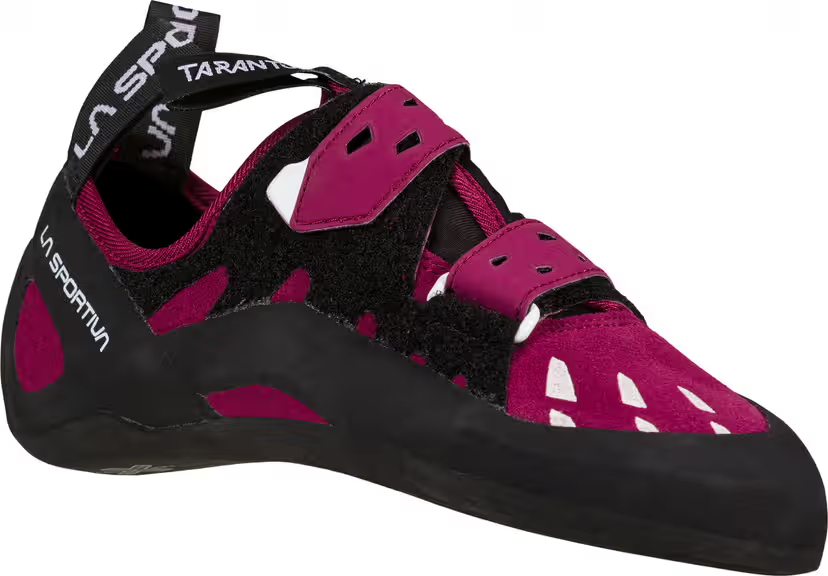
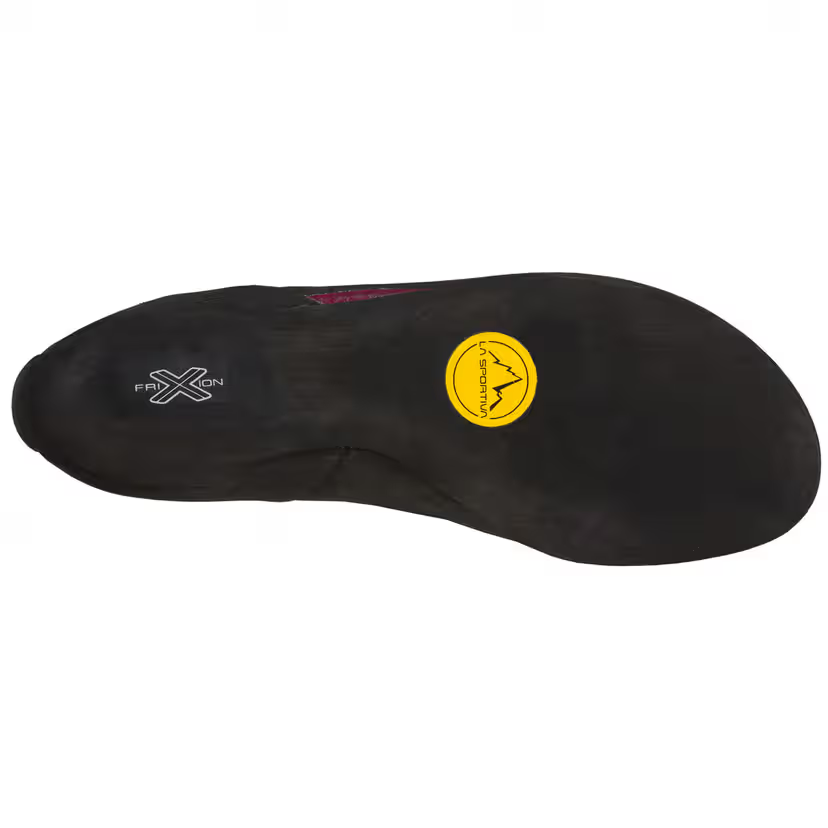
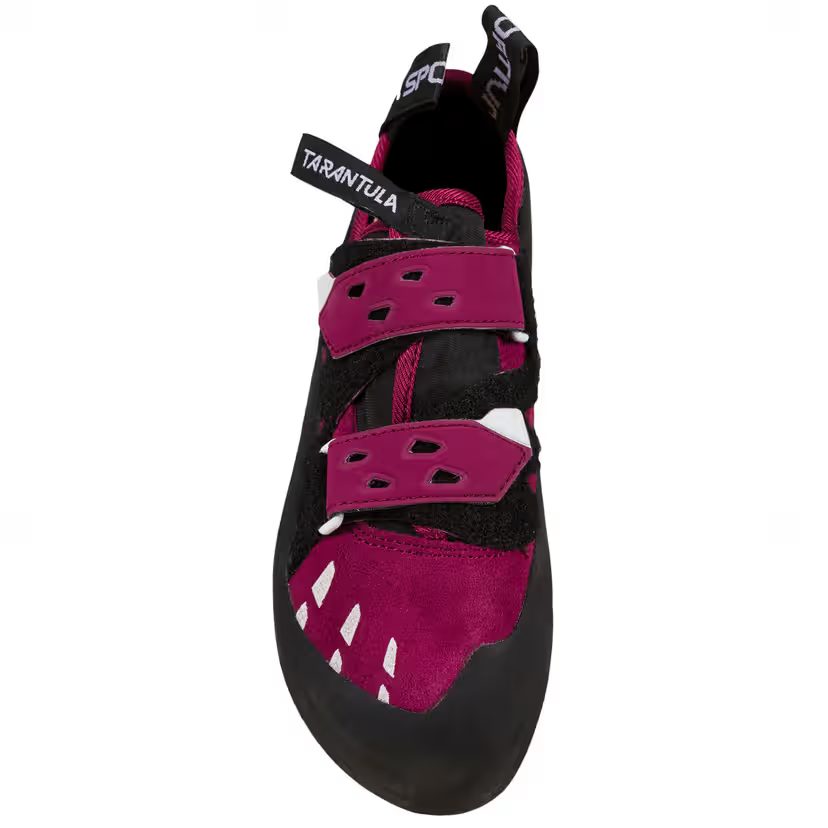
🏅 Best for Rugged Terrain: La Sportiva TarantulaTX (Women’s, Wide) — BroadToeBox Score
8.5
8.0
8.5
8.0
7.5
7.0
Why it works for scrambling and rocky trails: If your beginner hikes include any scrambling or steep rocky sections, La Sportiva’s reputation for precision footwork translates to boots. The toe box is 102mm wide and the sole is remarkably stiff for edging.
Specs:
– Available in E width (extra wide)
– Designed for technical alpine terrain
– Weighs 700g per boot
– MSRP: $200–220
Real feedback: Honestly, this is slightly overkill for flat trail hiking. But if your hikes involve elevation gain, loose rock, or creek crossings, the foot security is worth the investment.
Breaking In Your First Hiking Boots (The Right Way)
Week 1: Short, Flat Walks Only
🏅 Week 1: Short, Flat Walks Only — BroadToeBox Score
8.5
7.0
7.5
7.0
7.5
7.5
Wear your new boots for 2–3 short walks (1–2 miles max) on flat terrain. Your feet are adapting to a new environment. This isn’t the time to test your boots on a challenging trail.
What to wear:
– Merino wool hiking socks (minimum 80% merino). Cotton socks trap sweat and cause blisters.
– Bring blister treatment supplies, but honestly, if they’re the right width, you shouldn’t need them.
Week 2: Moderate Hikes with 500–1,000 Feet of Elevation
Now test your boots on a real hike with some climbing. Pay attention to:
- Do your heels slip? (Needs tighter lacing)
- Does your arch ache? (You might need insoles—see below)
- Are your toenails digging in? (Means you need a half-size larger)
Week 3+: Your Boots Are Ready
After three solid hikes, your boots should feel like a second skin. Any discomfort that persists isn’t “break-in”—it’s a fit problem.
The Insole Upgrade (Worth It for Wide Feet)
Stock insoles in wide boots are often terrible. Spend $40–60 on aftermarket insoles like Superfeet Green or Powerstep. Wide feet benefit disproportionately from arch support because the extra width puts more stress on the arch structure.
Common Mistakes Women Make with First Hiking Boots
1. Buying for Your Current Shoe Size Instead of Hiking Boot Size
Your hiking boot should be ½ to 1 full size larger than your street shoe. If you wear a size 8 street shoe, you likely need a size 8.5 or 9 in hiking boots. This feels weird at first, but it accounts for:
- Foot swelling on longer hikes (especially above 8,000 feet)
- Thick merino wool hiking socks
- The need for a thin insole layer
2. Assuming “Wide” From One Brand Works the Same as Another
“Wide” is not standardized. Salomon’s E width is roomier than Merrell’s D width. Keen’s standard width is wider than Altra’s wide. You cannot reliably size online without knowing the actual toe box measurement. If you can’t find it, call the retailer or contact the brand directly.
3. Ignoring Heel Slippage as a “Normal” Break-In Issue
A small amount of heel slip (less than ¼ inch) is normal in new boots. But if your heel is sliding more than that, the boot is too wide in the heel, and tightening laces won’t fix it. This leads to blisters and black toenails, not better fit.
Solution: Try a heel lock technique (shown in most boot fitting guides online), or return the boots and size down.
4. Not Testing in the Actual Conditions You’ll Hike
Buy boots, then test them on the type of terrain you’ll actually hike. If you’re planning rocky alpine trails, testing on a flat paved path tells you nothing. If your hikes are wet and muddy, test in wet conditions. Your boots behave differently in mud than on dry trail.
Our Top Picks for Women Beginners with Wide Feet
For most women starting out: Salomon Quest Rove GTX in E width Check Price on Amazon →. The fit is reliable, the price is reasonable, and they handle almost any beginner trail.
For budget-conscious hikers: Keen Targhee IV in Wide Check Price on Amazon →. You’re not sacrificing quality for price—Keen makes wider boots.
For technical terrain: La Sportiva TarantulaTX in E width Check Price on Amazon →. Only if your beginner hikes include scrambling or serious elevation.
FAQ: Hiking Boots for Women with Wide Feet
Q: Will Feet get wider if I hike more?
A: Slightly, yes. Your feet may swell up to a half-size during hiking season. This is another reason to buy boots ½–1 size larger than your street shoes.
Q: Do I need insulated boots for beginner hiking?
A: Not necessarily. If you’re hiking below 8,000 feet and above freezing, uninsulated boots work fine. Insulation adds weight and makes feet sweat in milder weather. Choose based on your climate, not your experience level.
Q: How do We know if the boots are actually too narrow vs. just needing break-in?
A: If after three solid hikes your midfoot or toe box still feels painfully tight, and you can fit less than one finger width between your heel and the boot when standing, the boots are too narrow. Don’t force it.
Q: Can I wear regular socks with hiking boots?
A: Technically yes, but don’t. Cotton socks absorb sweat, which causes blisters and cold feet. Merino wool or synthetic hiking socks ($15–20 per pair) are worth every penny. You’ll need them for comfort on longer hikes anyway.
Q: Should I buy boots at a specialty outdoor store or online?
A: Specialty store for your first pair (so staff can watch your gait and check fit), then online once you know your size and width in specific brands. Most online retailers offer free returns, so there’s no risk if the fit is wrong.