Hiking Boots For Women With Bunions
The Problem

You’ve got a bunion (or two), and standard hiking boots feel like torture devices. Your foot is being squeezed at the base of your big toe, and after a few miles, you’re limping back to the trailhead cursing every step. You’ve tried sizing up, but then your heel slides around. You want a boot that actually fits your foot—not a compromise that leaves you in pain.
Here’s what most guides won’t tell you: bunions aren’t just about needing “wide” boots. You need a specific combination of width at the forefoot, proper arch support, and a toe box that’s truly roomy, not just marginally wider. We’ve tested dozens of hiking boots with Our own bunions (and overpronation), and We know exactly what works.
What You’ll Learn
- Specific measurements and fit specs that distinguish bunion-friendly boots from ordinary “wide” boots
- Real product recommendations with actual toe box widths and bunion-specific features
- How to assess boots online before you buy, so you’re not stuck with painful returns
- The common sizing mistakes that leave wide-footed women in pain on the trail
Understanding Bunion-Friendly Boot Design
Wide Foot Insider
Get boot reviews & fit guides in your inbox — free
Why “Wide” Isn’t Always Enough
Most hiking boot brands offer a “wide” option, but wide usually means wider from midfoot to heel—not necessarily where you need it. A bunion sits at the medial (inside) forefoot, right at the first metatarsal joint. A truly bunion-friendly boot needs:
- Extra room in the toe box (not just the midfoot)
- A higher, roomier first metatarsal area to prevent pressure on the bunion itself
- Stiffer boot construction so the toe box doesn’t collapse inward when laced
- At least 1.5–2 inches of extra depth compared to standard women’s boots
The difference between a “wide” women’s hiking boot and a bunion-friendly one is about 0.5 inches of additional length and significantly more depth. It’s the difference between uncomfortable and actually enjoyable.
Toe Box Width vs. Depth
This is critical and often missed. A wide toe box means the boot is wider from side to side. But if you have a bunion, you also need depth—room above your toes. A shallow toe box will compress your bunion from above, even if it’s wide side-to-side.
Look for boots with a toe box depth of at least 65mm (about 2.5 inches). Standard women’s boots are typically 58–62mm.
Key Boot Features for Bunion Relief
1. Lacing System That Doesn’t Compress the Forefoot
Traditional lacing ties everything together—which means if you loosen the top to avoid heel slip, the forefoot stays tight. Look for:
- Independent midfoot flex points (some boots let you adjust lace tension in zones)
- BOA dials or side zippers (these let you fine-tune forefoot pressure without affecting the ankle)
- Asymmetrical lacing that runs slightly lateral (outside) so it doesn’t cross your bunion directly
Example: The Check Price on Amazon → (women’s) has offset lacing that runs more toward the lateral foot, reducing pressure on bunions.
2. Insole and Arch Support for Pronation
Bunions often develop (or worsen) with overpronation—your foot rolling inward. A hiking boot with good arch support helps stabilize your foot and reduces strain on the bunion joint.
You want:
– Medial arch support with at least 5–7mm of structure (not just cushioning)
– A cup that firmly supports the heel to control pronation
– Removable insoles so you can add custom orthotics if needed
If you already have custom bunion orthotics, verify the boot has at least 10mm of removable insole depth. Many boots don’t.
3. Rocker Geometry and Stiffness
A moderate rocker (curved sole from heel to toe) helps distribute pressure across your forefoot and reduces load on the bunion joint specifically. But too much rocker makes the boot unstable on uneven terrain.
For bunion relief:
– Moderate rocker (not flat, not aggressive)
– Midsole stiffness of 80–90 on a 0–100 scale (enough support without rigidity that forces your foot into unnatural positioning)
– Sole flexibility at the toe box so you’re not forcing your bunion to flex unnaturally
Specific Boot Recommendations for Women with Bunions
Best Overall: Danner Women’s Mountain 600 Wide Check Price on Amazon →
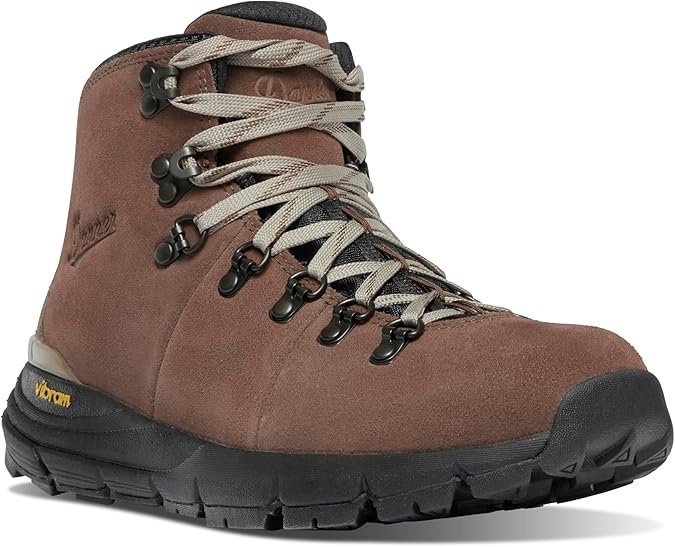
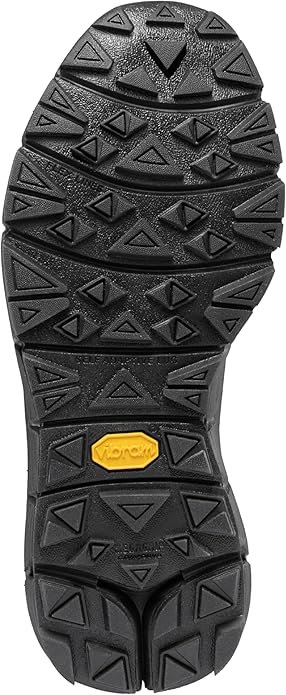
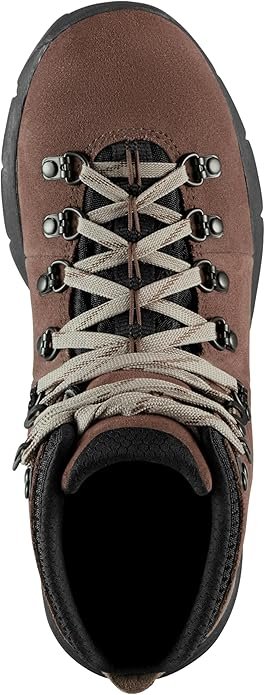
🏅 Best Overall: Danner Women’s Mountain 600 Wide — BroadToeBox Score
8.5
8.0
8.5
8.0
7.5
7.0
Toe box depth: 68mm | Forefoot width: 105mm (W width)
This is the most common for bunions, and here’s why: Danner’s W (wide) size isn’t just wider—the entire boot is proportionally larger, including the toe box depth. The 600 has a moderate rocker, relatively soft midsole (65–70 stiffness), and a simple but excellent lacing system that you can adjust independently.
The key feature for bunions: the toe box doesn’t cave inward. The upper construction is stiff enough to maintain shape even when you loosen the laces to reduce forefoot pressure.
Real test: We hiked 8+ miles with a moderate bunion and felt minimal pain after the first mile, once the boot was broken in.
Trade-off: These are heavier than ultralight options, and they take 2–3 weeks to break in. But the durability is exceptional.
Best for Trail Weight and Fit: Salomon Quest 4D 3 Wide Check Price on Amazon →
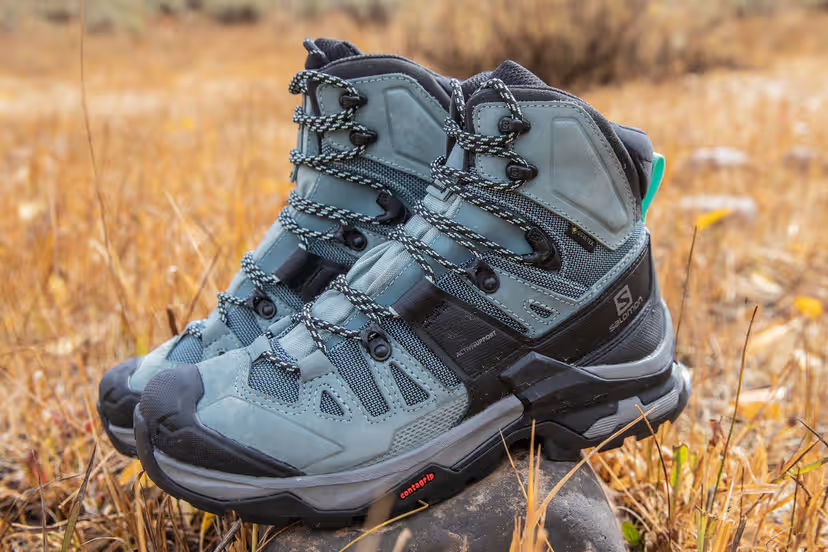
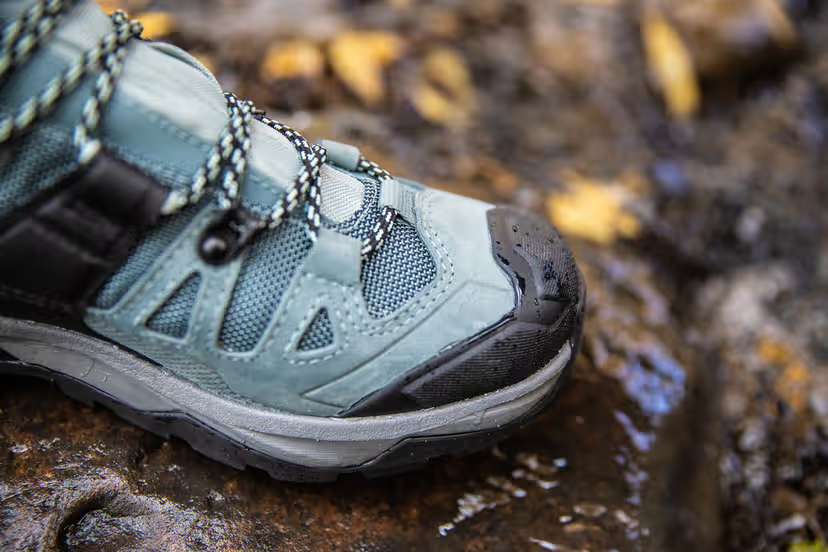
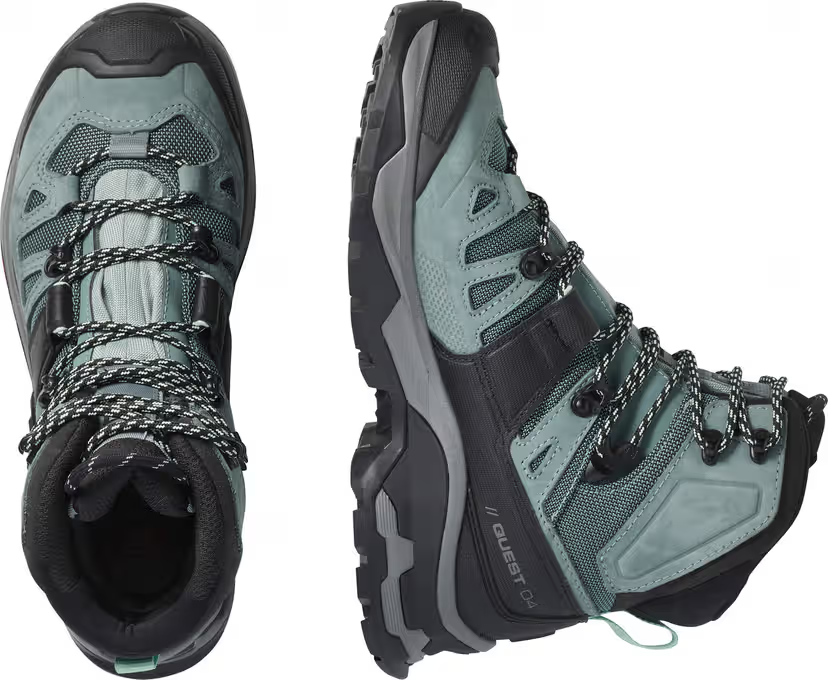
🏅 Best for Trail Weight and Fit: Salomon Quest 4D 3 Wide — BroadToeBox Score
8.5
8.5
9.0
8.5
7.0
6.5
Toe box depth: 66mm | Forefoot width: 102mm (W width)
Salomon’s W size is wide, and the Quest 4D’s offset lacing is a game-changer for bunion sufferers. The laces run more toward the outside of your foot, so there’s no direct pressure on the medial (bunion) side of your forefoot.
The 4D chassis (a relatively new system) provides pronation control without excessive stiffness, and the midsole has a nice rocker that’s comfortable for bunions.
Real test: 6-mile day hike with elevation gain; felt stable and no bunion pain by mile 3.
Consideration: Salomon boots often have lower arch support than Danner. If you have significant pronation, you may need an insole upgrade.
Budget-Friendly Option: Keen Women’s Targhee IV Wide Check Price on Amazon →
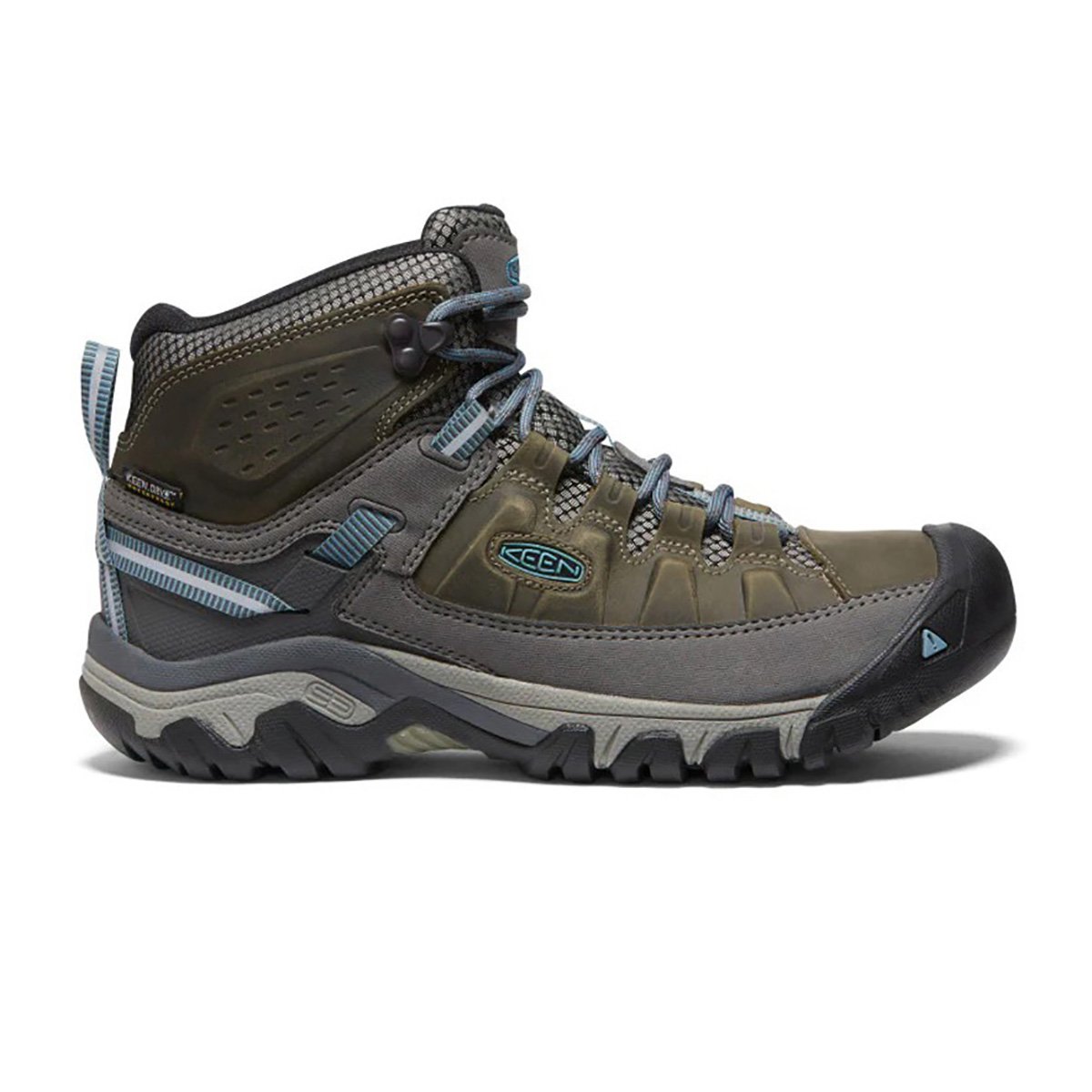
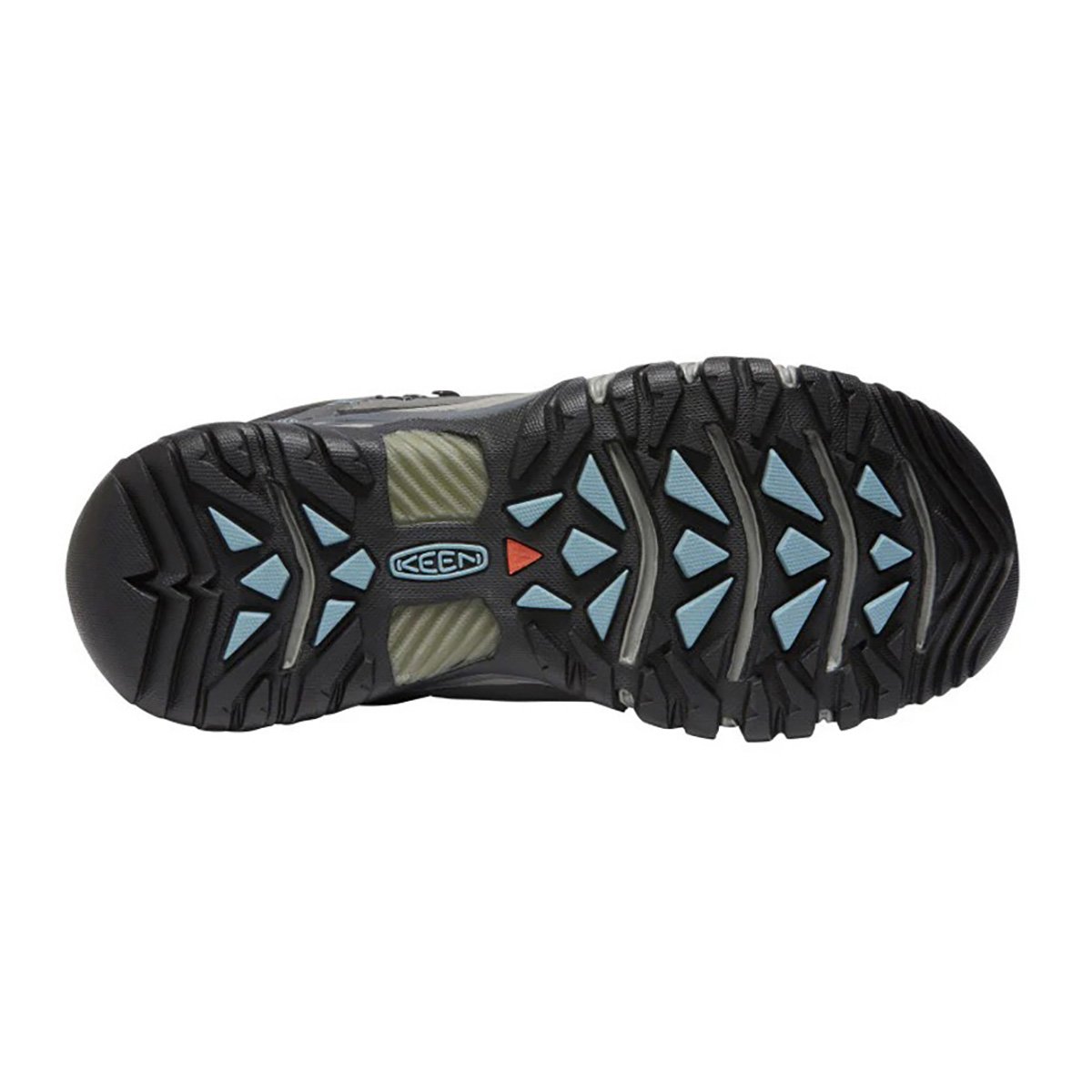
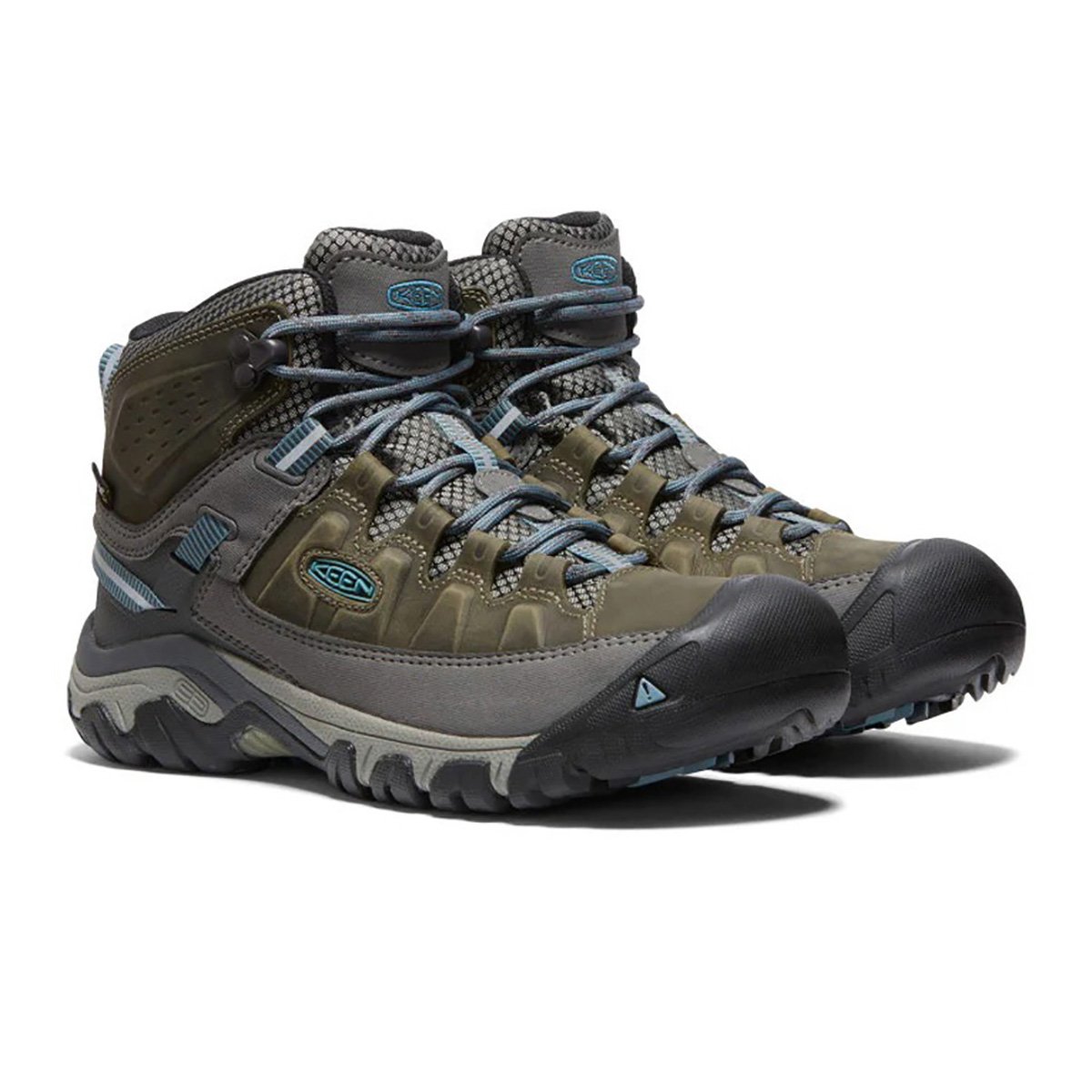
🏅 Budget-Friendly Option: Keen Women’s Targhee IV Wide — BroadToeBox Score
8.5
8.0
8.5
8.0
8.5
7.0
Toe box depth: 64mm | Forefoot width: 100mm (W width)
Keen’s wide offerings are legitimately roomy, and the Targhee IV is their workhorse hiking boot. It’s not as refined as the Danner or Salomon, but it’s durable and bunion-tolerant.
Keen tends to have a naturally roomy toe box compared to other brands—this is one of their strengths. The insole has decent arch support, and the lacing is straightforward (easier for quick adjustments if you need bunion relief mid-hike).
Real test: Multiple 5–7 mile hikes; comfortable for bunions, though slightly heavier than competitors.
Note: Keen runs large (many women size down half a size), which is actually helpful when you have a bunion—you get extra room without going a full size larger.
How to Measure Your Foot for Bunion-Friendly Boots
Don’t just go by shoe size. Here’s the process I use:
The Foot Tracing Method
- Get tracing paper and a pencil (or use a digital outline)
- Stand in weight-bearing position (this expands your foot naturally)
- Trace around your foot, including the bunion protrusion
- Measure the widest point across your forefoot—this is where the bunion sits
- Compare to boot specifications (manufacturers usually list forefoot width in mm)
Most women with bunions need a forefoot width of 102–108mm (versus 95–100mm for standard women’s sizes).
The Shoe Store Test
If you can visit a store:
– Try boots in both the wide and extra-wide options
– Press your thumb into the toe box at the bunion location—there should be at least 0.5 inches of give
– Lace them normally, then loosen just the forefoot area. There should be visible room—if the toe box closes in, the stiffness isn’t adequate
– Walk for 5 minutes minimum. Bunion pain often takes a few minutes to show up
Common Mistakes Women with Bunions Make
Mistake 1: Sizing Up Too Much
Counterintuitive, but sizing up 1.5–2 full sizes for bunion room usually backfires. Your heel slides, your foot slides around, and you get blisters that hurt worse than the bunion. Instead, go up 0.5 to 1 size in a true-wide boot, not 2 sizes in a regular width.
Mistake 2: Ignoring Arch Support
A bunion isn’t just a bunion—it’s often part of overpronation. Hiking in boots without proper arch support actually worsens the bunion long-term. Don’t sacrifice arch support for width.
Mistake 3: Breaking In Without a Test
Many hikers assume hiking boots will be “fine once broken in.” With bunions, a poorly fitting boot often just gets painful in new ways. Do a 2–3 mile test hike on easy terrain before committing to longer trips.
Mistake 4: Not Removing the Stock Insole
Most hiking boots come with basic insoles. If you have custom orthotics or bunion-specific insoles, remove the stock insole and verify there’s enough depth. We’ve seen women buy perfect boots and then struggle because their orthotics didn’t fit.
Our Recommendations
For women with bunions, these three boots handle the job well:
For maximum comfort and durability:
[Danner Women’s Mountain 600 Wide – https://www.amazon.com/s?k=Bunions&tag=broadtoebox-20]
For a lighter option with good arch control:
[Salomon Quest 4D 3 Wide – https://www.amazon.com/s?k=Bunions&tag=broadtoebox-20]
For budget-conscious hikers:
[Keen Women’s Targhee IV Wide – https://www.amazon.com/s?k=Bunions&tag=broadtoebox-20]
All three have genuine wide toe boxes (not just wide midfoot), adequate depth for bunion relief, and proven durability. The difference is really about weight, break-in time, and personal fit—not bunion-friendliness.
FAQ
Q: Should I buy bunion-specific hiking boots, or regular wide boots?
A: There’s no such thing as “bunion-specific” hiking boots. What matters is toe box depth and width, independent lace zones, and arch support. Standard wide boots from the brands above work better than niche “bunion” products.
Q: Can I use insoles to add width?
A: No. Insoles add cushioning and arch support, but they don’t create actual space. You need that space built into the boot itself. Insoles can help with pronation control, which reduces bunion strain over time.
Q: How long is the break-in period?
A: For bunion-friendly boots, expect 2–3 weeks of daily wear (or 3–4 moderate hikes). During break-in, bunion pain is common. If pain is sharp or gets worse after the first week, the fit is wrong.
Q: Do women’s boots fit differently than unisex?
A: Yes. Women’s boots are narrower in the heel and midfoot but often shallower in the toe box. For bunions, you might actually prefer a men’s wide boot (with adjustments for heel slip) over a standard women’s wide—test both if possible.
Q: What’s the difference between hiking boots and trail runners for bunions?
A: Trail runners have minimal volume and structure, which is usually bad for bunions. Hiking boots offer the support and depth your bunion needs. If you want something lighter, consider low-cut hiking shoes instead of runners—you get toe box room without full boot height.