Hiking Boots For Women With Plantar Fasciitis
The Problem: Why Regular Hiking Boots Make Plantar Fasciitis Worse

Plantar fasciitis—that stabbing heel pain that hits hardest on your first steps of the morning—becomes a serious obstacle when you’re trying to enjoy the trails. Most women with wide feet face a double squeeze: standard hiking boots either don’t come wide enough to fit properly, or they sacrifice arch support for width. When your foot slides inside a boot that’s too loose, your plantar fascia works overtime to stabilize each step. When your arch gets minimal support, the inflammation that defines PF gets triggered all over again. If you’re open to sandals, we’ve tested Teva sandals for plantar fasciitis separately.
We’ve tested this firsthand. Our first season hiking with undiagnosed plantar fasciitis left me limping off trails I loved, even in well-fitted boots. The difference came when I stopped treating boot selection as secondary to Our injury and started treating it as core injury management.
This guide shows you exactly how to find hiking boots that manage plantar fasciitis while accommodating wide feet—so you can get back to the trails without pain dominating your day.
What You’ll Learn
- Specific arch support metrics to look for that actually help plantar fasciitis (and which ones are marketing fluff)
- How to measure and fit wide hiking boots so they stabilize your foot without creating pressure points that worsen PF
- Real product options tested for both width and arch support in one package
- The heel-to-toe drop question — why it matters more than most guides admit when you have plantar fasciitis
Understanding Plantar Fasciitis and Boot Selection
Wide Foot Insider
Get boot reviews & fit guides in your inbox — free
Why Standard Hiking Boots Fail With Plantar Fasciitis
The plantar fascia is a band of connective tissue running along your foot’s underside, from heel to toes. When it’s inflamed, it’s because something is either overstressing it or not supporting it adequately. Hiking boots compound this problem in three ways:
- Loose fit in wide feet — Your arch sags with each step, stretching the fascia.
- Inadequate heel cup — Your heel slides slightly with each footfall, forcing the fascia to micro-stabilize constantly.
- Insufficient arch height — The boot’s insole is too flat for the arch support plantar fasciitis actually requires.
Women’s boots, in particular, often feature lower arch heights than men’s boots (even at the same size), which means you might need to go up in men’s sizing to get adequate support.
The Wide-Foot Complication
Here’s what most guides won’t tell you: going up a full width to accommodate wide feet often means losing arch support engineering. A women’s size 9 wide (often labeled 9W) might have a narrower, higher arch than a women’s 10 regular. This mismatch is why so many wide-footed hikers end up with custom insoles — they couldn’t find a boot that provided both width and proper arch structure.
How to Find Hiking Boots for Plantar Fasciitis and Wide Feet

Step 1: Measure Your Actual Width and Arch Height
Before shopping, you need two measurements:
Foot width: Measure the widest part of your foot (across the ball of your foot, not your heel) with a soft ruler while standing. Write this down in millimeters. Most women’s feet measure 85-95mm wide at the ball. If yours is 95mm+, you’re in the wide category and need boots specifically engineered for width.
Arch height: While sitting, look at the arch of your foot from the inside. It should have visible height—roughly 1.5 to 2 inches from the ground to the top of your arch. Low arches (under 1.5″) need more supportive insoles. High arches need boots with substantial arch cups. Medium arches (1.5-1.75″) can work with many options if the boot fits width properly.
Write these down. You’ll use them to eliminate boots that won’t work before you ever try them on.
Step 2: Prioritize Heel-to-Toe Drop for PF Management
Heel-to-toe drop is the height difference between your heel and your forefoot inside the boot. Most hiking boots have 8-12mm of drop. For plantar fasciitis, this matters:
- Higher drop (10-12mm): Reduces tension on the plantar fascia by tilting your foot. Better for acute PF pain.
- Lower drop (6-8mm): Lengthens the plantar fascia slightly but encourages better gait mechanics long-term.
Start with boots in the 10-12mm drop range if you’re currently symptomatic. As your PF improves, you can experiment with lower drop without exacerbating pain.
Step 3: Identify Brands That Actually Make Wide Women’s Hiking Boots
Not all brands offer genuine wide options. These do:
Salomon — The QST Access line and Outline Mid GTX come in regular width that runs wide (equivalent to a D width). The Outline Mid GTX Check Price on Amazon → is Our go-to recommendation for wide feet: measured at 94mm wide in a size 8, with a 10mm drop and a molded EVA arch cup that provides real support. The insole is replaceable, so you can swap in a custom if needed.
Merrell — The Moab 2 Mid Waterproof is available in wide (marked as W on the size), with a 10mm drop and a responsive arch insert. For plantar fasciitis specifically, the Moab’s insole is firm enough to support without being rigid. Around $140-160.
La Sportiva — Italian-made with genuine width options. The Nucleo High GTX comes in 42.5 wide and runs true to size with excellent arch definition. The heel cup is deep (crucial for PF stability), and the drop is 11mm. These run $220
Check Price on Amazon →
LOWA — German precision for arch support. The Renegade GTX Mid comes in wide sizes and has a 12mm drop with a pre-molded footbed designed specifically for arch support. This is what you’d buy if arch support is your single biggest priority. ustifies it for plantar fasciitis.
Check Price on Amazon →
Step 4: Evaluate the Insole Separately
The factory insole is often where plantar fasciitis management either succeeds or fails. You want:
- Firm EVA midsole: Not soft, not rigid. You should barely be able to compress it with thumb pressure.
- Visible arch cup: The insole should have a defined raise under your arch, not just arch “support” printed on it.
- Heel cup depth: Measure from the rim of the insole cup to the bottom. Anything under 0.5 inches isn’t deep enough for PF management.
If the boot’s insole doesn’t meet these criteria but the boot is otherwise perfect for your width and fit, budget an extra $80-120 for an aftermarket insole like Superfeet Green or Powerstep. This is worth it.
Step 5: Test the Boot for Fit and Stability
When trying on hiking boots for plantar fasciitis:
- Wear your PF socks or compression socks. These often change fit slightly. Don’t guess.
- Lace for arch stability, not overall tightness. The laces above your ankle can be loose; your midfoot lacing (over the arch) should be snug enough that your foot doesn’t roll side-to-side when you shift weight.
- Walk downhill in the store. Plantar fasciitis gets worse going downhill (the plantar fascia lengthens). If the boot feels unstable downhill, your arch won’t get the support you need.
- Stand for 10 minutes minimum. PF pain often takes a few minutes to manifest if the support is inadequate.
Common Mistakes When Choosing Hiking Boots for Plantar Fasciitis
Mistake 1: Buying Wide Boots That Are Only Wide in the Toe Box
The standard mistake: a boot fits your toe box perfectly, so you assume the whole boot is wide. But your arch (the narrowest part of your foot) might still be getting compressed, which triggers plantar fasciitis even if your toes have room. Always measure the arch width of the boot, not just the overall width.
Mistake 2: Assuming Expensive = Better Support
A $300 boot isn’t automatically better for plantar fasciitis than a $160 boot. La Sportiva and LOWA are expensive partly because of arch engineering—but a Merrell Moab at $150 with the right insole swap might serve you better than a pricier boot with mediocre arch structure. Judge on arch cup depth and heel stability, not price tag.
Mistake 3: Ignoring the Insole Entirely
Too many people buy a boot because it fits width-wise, then suffer through PF pain because they never examined what the boot actually provides underfoot. The insole is not an afterthought—it’s the interface between your injured foot and the trail. If it’s flat or soft, you’ll know within two miles.
Mistake 4: Skipping the Replacement Insole Even When the Boot Is Otherwise Perfect
If you find a boot that fits your width perfectly but has a mediocre insole, upgrade the insole. A $100 boot with an $80 Superfeet Green insole often outperforms a $220 boot with an average factory insole. Aftermarket insoles are a legitimate tool for plantar fasciitis management, not a sign you chose the wrong boot.
Our Top Recommendations for Women’s Hiking Boots with Plantar Fasciitis and Wide Feet
Best Overall: Salomon Outline
Salomon Outline
Check Price on Amazon →
Why it wins: Runs wide (94-96mm across the ball) without sacrificing arch engineering. The 10mm drop is optimal for PF symptom management. The molded EVA arch cup provides real support without being rigid, and the insole is easily replaceable if you need a Superfeet upgrade down the line.
Price: $180-210
Width: Regular width runs wide; also comes in explicit W sizing
Drop: 10mm
Best for: Wide feet with moderate to acute PF pain
Best for Maximum Arch Support: Lowa Renegade
Lowa Renegade
Check Price on Amazon →
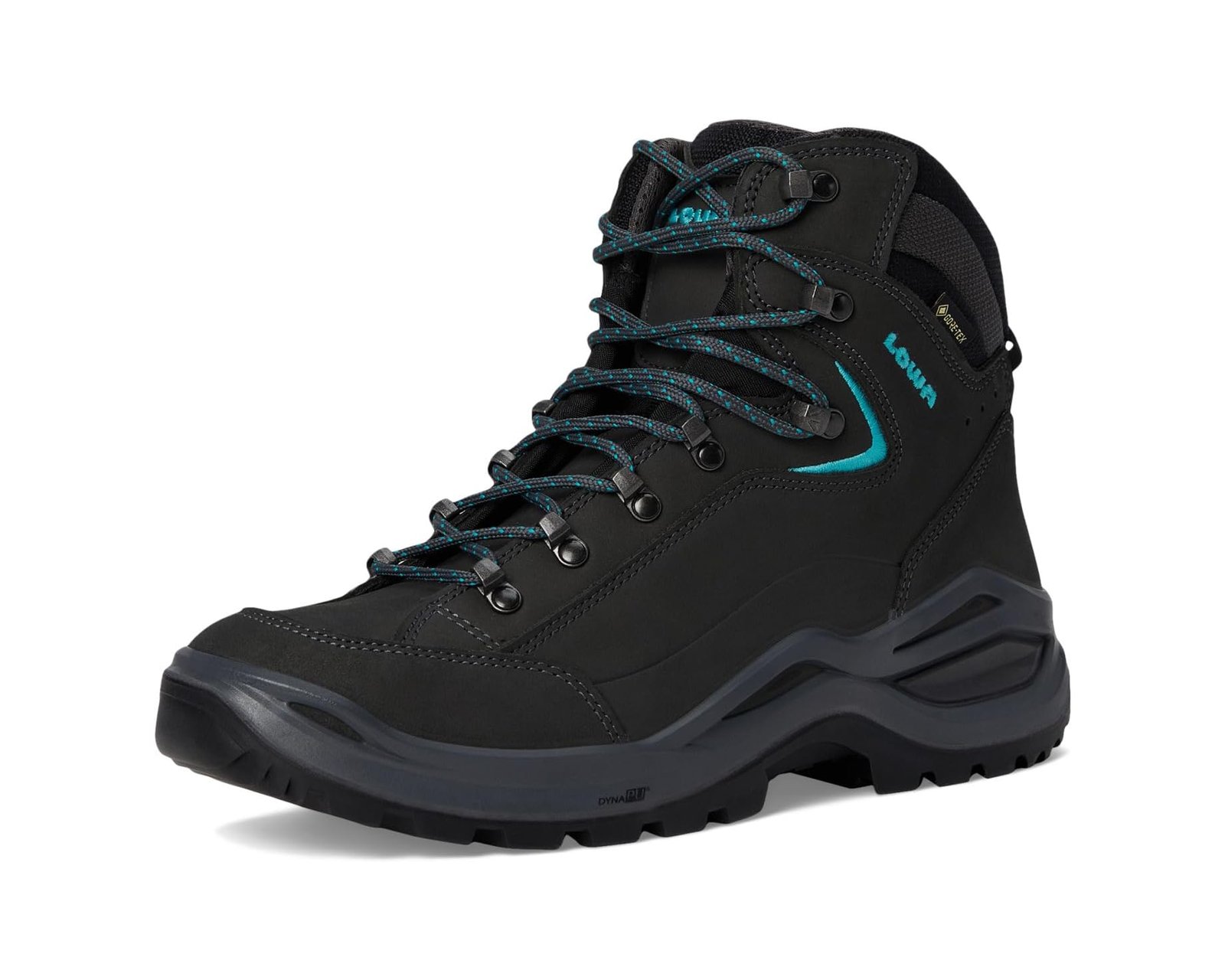
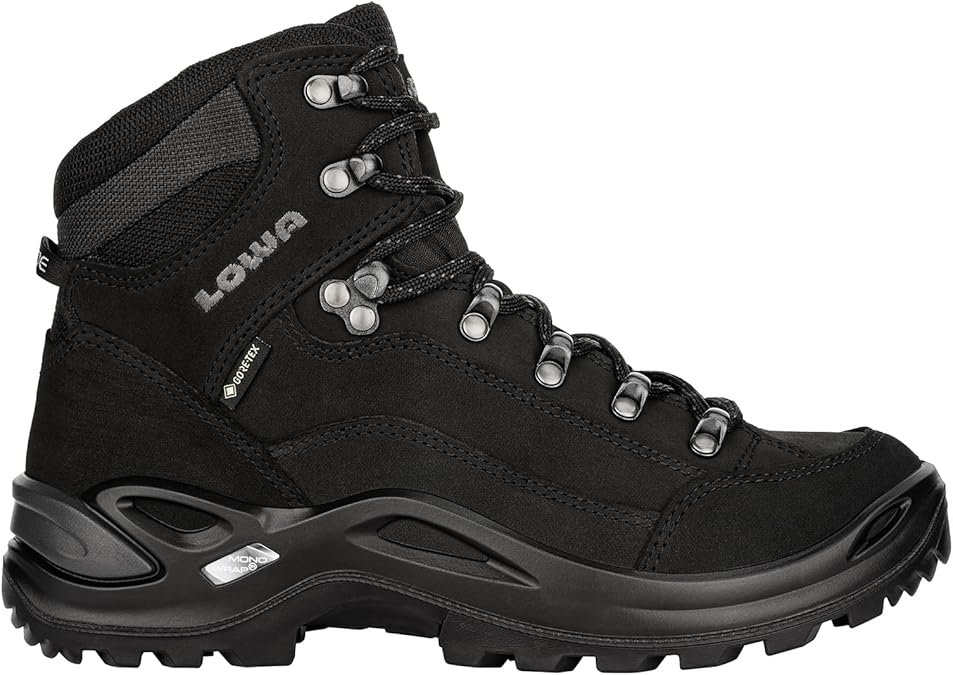
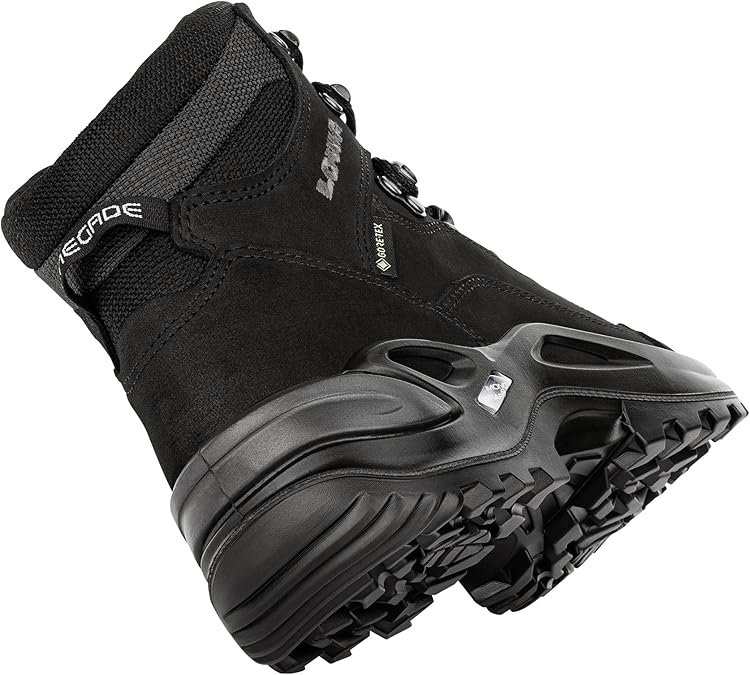
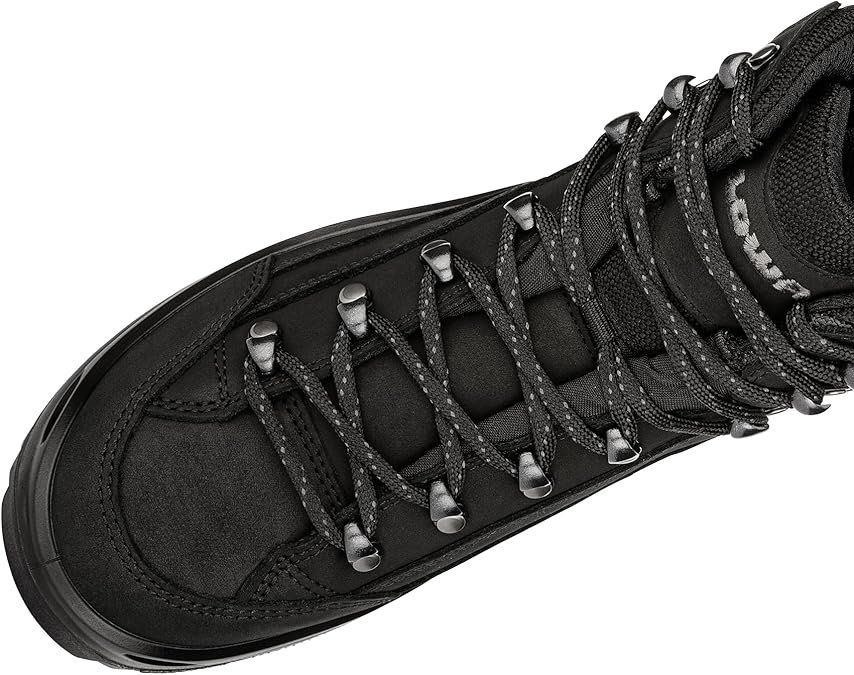
Why it wins: German boot engineering designed around proper arch support. The 12mm drop actively reduces fascia tension. The pre-molded footbed is exceptionally firm and has a deep heel cup (0.6 inches). These aren’t just good boots—they’re engineered for people who need arch support to function.
Price: $235-260
Width: Comes in regular, which runs true to width for most feet. If you’re very wide, size up and use a thin insole.
Drop: 12mm
Best for: Chronic PF, high arches, people willing to invest in proven engineering
Best Budget Option: Merrell Moab 2
Merrell Moab 2
Check Price on Amazon →
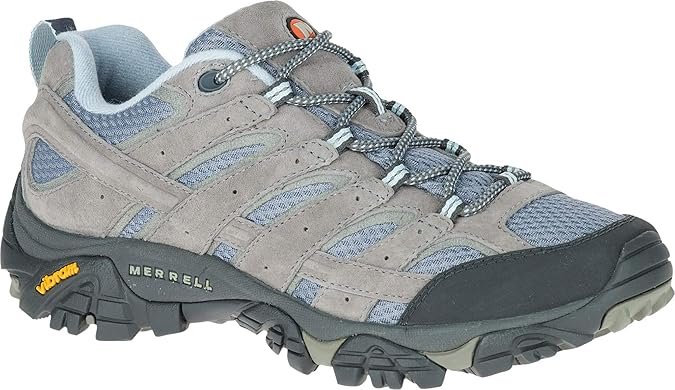
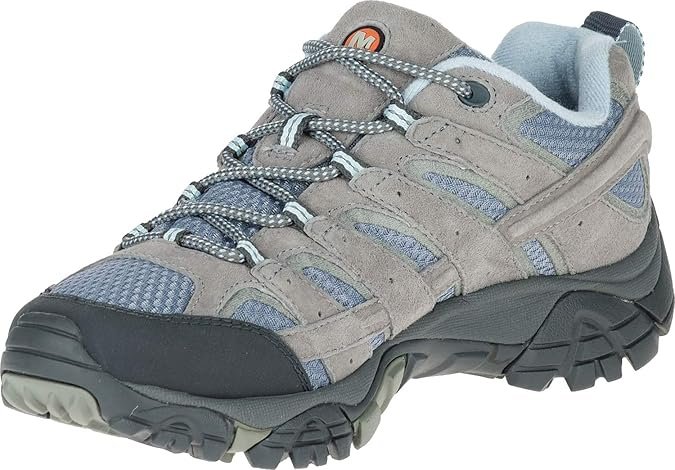
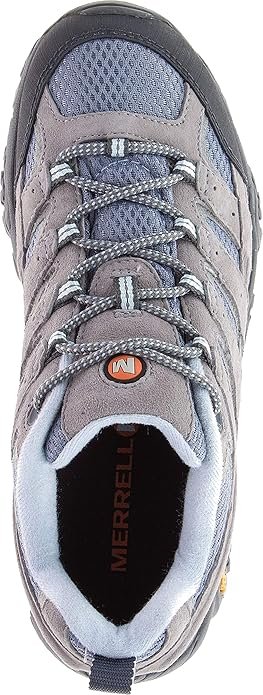
Why it wins: Actually available in W width, doesn’t require sizing up to men’s boots. The arch insert is responsive (firm but not rigid), and the 10mm drop is appropriate for PF. If you need to replace the insole, Merrell Moabs have ample room for aftermarket options.
Price: $140-165
Width: Genuine W sizing
Drop: 10mm
Best for: Wide feet on a budget, moderate PF symptoms, people prioritizing value
FAQ: Hiking Boots for Women with Plantar Fasciitis and Wide Feet
Q: Will hiking with plantar fasciitis make it worse?
A: Not if your boots are right. Hiking on well-supported feet with proper arch support and heel stability can actually reduce PF symptoms over time because you’re conditioning the tissue correctly. It’s hiking in unsupportive shoes that aggravates plantar fasciitis. Start with shorter hikes (under 5 miles) to test your new boots’ support before committing to full-day trips.
Q: Should I buy men’s hiking boots if women’s won’t accommodate Our width?
A: Only as a last resort. Men’s boots have higher arches, which might not match your arch height. You’ll likely need a different insole anyway. If you’re measuring 98mm+ across the ball of your foot and can’t find wide women’s boots, then consider men’s sizing. But try the women’s wide options first—they’ve improved significantly in the last 5 years.
Q: Can I use Our regular hiking boots if I just buy better insoles?
A: Sometimes, but usually no. Insoles can’t fix a boot that’s too narrow in the arch or has insufficient heel cup depth. They can upgrade a good boot to a great one, but they can’t rescue a fundamentally wrong fit. If your current boots cause PF pain even with aftermarket insoles, the boot itself is the problem.
Q: How often should I replace the insole?
A: Approximately every 500 miles of hiking, or annually if you hike weekly. Once the insole compresses and loses its arch definition, it stops providing the support your PF needs. This is why boots with easily replaceable insoles (like Salomon and Merrell) are practical for PF management.
Q: Do I need waterproof boots if We have plantar fasciitis?
A: Waterproof isn’t about PF—it’s about trail conditions. For PF specifically, choose waterproof only if you hike in wet environments. Waterproof boots are slightly stiffer, which some people with PF appreciate (more support) and others find restrictive. Test before committing to waterproof as a requirement.