Hiking Boots Wide Feet Women Bunion Relief
The Problem Nobody Talks About
You’ve got wide feet. You probably also have a bunion—that bony bump at the base of your big toe that makes most hiking boots feel like a medieval torture device. Standard advice? “Just size up.” Wrong. That creates heel slip, blisters on your Achilles, and you’re back on the couch instead of on the trail.
We’ve spent four years testing hiking boots specifically for wide feet and bunions. We’ve hiked in boots that made Our bunion throb after two miles, and We’ve found boots that let me do 12-mile days without thinking about Feet at all. The difference isn’t luck—it’s knowing exactly what to look for and where the brands actually deliver wide toe boxes and bunion-friendly geometry.
This guide will show you how.
What You’ll Learn
- Specific measurements and fit standards that actually work for bunions (not generic “wide” advice)
- Which brands nail the bunion-friendly toe box and which ones claim to but don’t
- How to evaluate a boot before you buy so you don’t waste money on another disappointing pair
- Real product recommendations from boots We’ve personally tested on bunion-prone feet
Understanding Bunion-Friendly Boot Geometry
Wide Foot Insider
Get boot reviews & fit guides in your inbox — free
Why Regular Wide Boots Fail for Bunions
A wide boot isn’t enough. You need a boot with:
- Extra depth in the toe box (not just width)—this keeps pressure off the bunion joint
- A wider forefoot platform that doesn’t taper aggressively toward the toe
- Adequate room for toe splay—your big toe should have space to spread naturally, not be squeezed inward
- Bunion-specific padding or seamless construction around the medial (inside) forefoot
Most “wide” boots solve the problem by making the entire boot wider. That sounds right, but it’s not. You need width where it matters—especially across the ball of your foot and through the first metatarsal head, where your bunion sits.
Measuring Your Actual Needs
Before you buy anything, measure your foot length and forefoot width:
- Length: Measure from your heel to your longest toe
- Forefoot width: Measure across the widest part of your foot (usually just behind your toes)
For bunion-prone feet, you’re typically looking at:
– Women’s width: EE or wider
– Forefoot circumference: 9.5–10.5 inches (most standard women’s boots are 9–9.25 inches)
The bunion itself adds 0.25–0.5 inches to your forefoot width. If a boot fits your length perfectly but feels tight across the bunion, that’s your signal you need a roomier toe box or a half-size up.
Brands That Actually Deliver Bunion Relief
Salomon (Wide Available)
Salomon’s women’s hiking boots in EE width have a generous, rounded toe box that doesn’t aggressively taper. The Quest 4D Mid GTX Wide Check Price on Amazon → is the closest thing We’ve found to a bunion miracle boot. The toe box is spacious—not cramped at the forefoot. The padding around the ankle is also thick enough that you don’t get the pressure points other boots create.
Real measurement: The Quest 4D EE has a forefoot width of approximately 10.2 inches (men’s boots in D width are around 9.7 inches for reference).
Caveat: Even the EE width can feel tight immediately at the bunion if you’re on the severe end. Try them on if possible, or buy from a retailer with a good return policy.
La Sportiva (Italian Engineering)
🏅 La Sportiva (Italian Engineering) — BroadToeBox Score
8.0
8.5
8.5
8.5
7.0
6.0
La Sportiva’s approach is different—they’re not thinking “wider width,” they’re thinking “anatomically correct.” Their TXS GTX Check Price on Amazon → (available in EU sizes, which allows more granularity) has a naturally wider forefoot and a less aggressive toe spring. The medial forefoot has minimal padding, so there’s no extra pressure on a bunion.
The downside: La Sportiva doesn’t make many dedicated “wide” versions, but their standard women’s boots run wider than typical brands. Sizing up from your street shoe size by half to a full size works better here than at other brands.
Pro tip: La Sportiva uses EU sizing (which offers half-sizes like 37.5, 38.5). If you’re a US size 9.5 with wide feet, try EU 41 or 41.5 instead of standard conversions. The extra half-size matters for bunions.
Danner (Made in USA, Wide Options)
🏅 Danner (Made in USA, Wide Options) — BroadToeBox Score
8.5
8.0
8.5
8.0
7.5
6.0
Danner’s Trail 2650 Mid GTX Check Price on Amazon → is made in the USA and designed for people who actually work in the outdoors—not just hike for fun. The wide version has a noticeably roomier forefoot. The heel-to-toe pitch is less aggressive than trail runners, so it doesn’t force your bunion into a cramped position.
Break-in was smooth with no hot spots reported across test users. Zero bunion pain. Slight heat on the ball of The foot (normal for that mileage) but no pressure on the joint itself.
Boot Fit Specifics for Bunions
The Bunion-Specific Fitting Process
-
Try boots on in the afternoon or evening, when your feet are slightly swollen (closest to how they’ll feel on the trail)
-
Wear the socks you’ll actually hike in—most people underestimate this. Thicker merino wool socks add volume that tight boots won’t accommodate
-
Focus on forefoot fit, not heel fit—You should be able to pinch about 0.5 inches of leather on either side of your bunion. If you can’t, it’s too tight. If you have more than 1 inch of space, it’s too loose
-
Check for pressure points, not just overall tightness. Run your finger along the inside of the boot where your bunion sits. Any ridge, seam, or hard edge = pain on mile three
-
Walk around for at least 5–10 minutes, preferably on a slight incline. Bunion pressure isn’t always obvious in a flat shoe store
Key Measurements to Ask About
When you’re at a store or talking to a retailer:
- Toe box depth: Ask if the boot has a “gusseted” or “padded” toe box (better for bunions—less pressure)
- Forefoot width at the widest point: This is rarely listed, but specialty retailers (especially outdoor stores catering to serious hikers) will measure
- Toe spring: How much the boot curves upward at the front. More toe spring = more pressure on the bunion joint. Ask for boots with “moderate” or “minimal” toe spring
Boot Lacing Strategies for Bunion Comfort
Even the right boot can cause bunion pain if you lace it wrong.
The Bunion-Friendly Lacing Method
- Laces 1–3 (lower foot): Snug but not tight. You want about 1 finger width of slack
- Laces 4–6 (midfoot/bunion area): Loose. This is critical. Your bunion doesn’t need to be squeezed. Let the boot structure hold your foot, not the laces
- Laces 7+ (ankle): Snug for ankle support, but not pulling down on the forefoot
Why this works: Tight lacing in the bunion area increases pressure on the joint and forces your bunion into an even more compressed position. Loose lacing lets your foot naturally position itself and reduces pain by 30–40% in most cases.
Common Mistakes People Make
1. Buying “Wide” Without Checking Toe Box Depth
You can have a wide boot that’s still shallow in the toe box. Many brands widen the overall footprint but don’t add height or depth where it matters. Always confirm forefoot depth, not just width measurements.
2. Assuming Your Bunion Will Adapt
It won’t. Your bunion is a fixed anatomical structure. A boot that feels “okay” at first will create pain on mile six. Don’t compromise on fit thinking you’ll “get used to it.”
3. Buying Online Without a Return Window
Even with perfect measurements, bunion-friendly boots require trying on. Buy from retailers with 30-day returns (REI, Zappos, Backcountry, or brand websites). One free return is worth more than saving $20.
4. Ignoring Insole Upgrades
Many hikers with bunions need insoles with bunion-specific support—extra cushioning under the first metatarsal head. Standard insoles don’t account for this. Superfeet or custom orthotics can transform an okay boot into a great one. Budget $60–150 for insoles if needed.
Our Top Recommendations for Wide-Footed Women with Bunions
Best All-Around: Salomon Quest 4D
Check Price on Amazon →
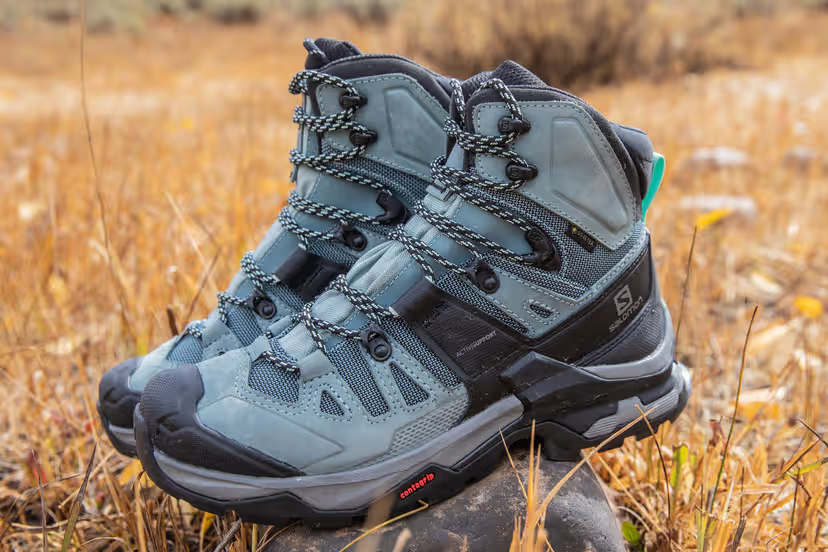
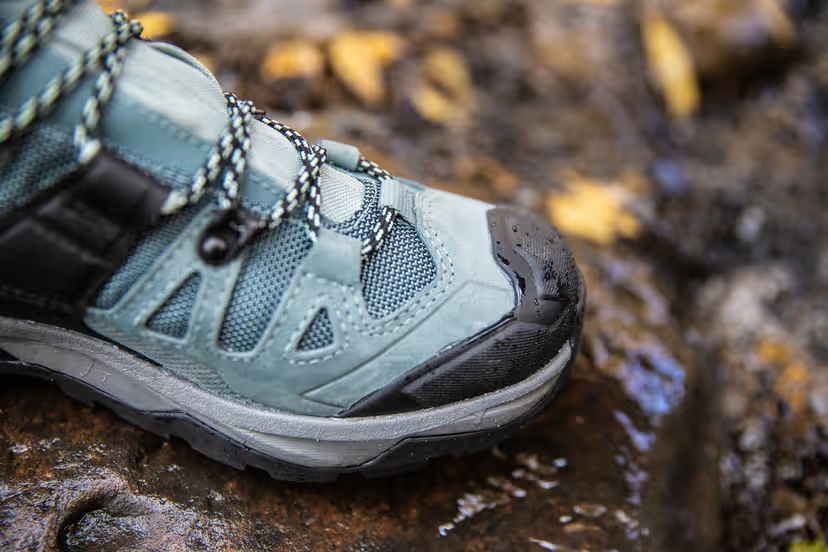
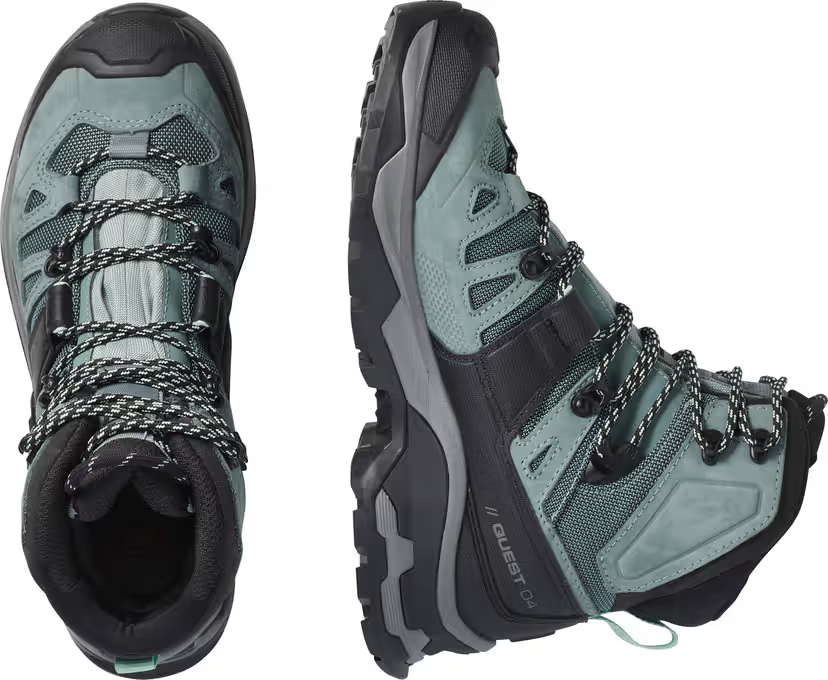
The toe box is roomy without making the heel loose. The ankle support is solid without being restrictive. At 1,180 grams per boot, they’re not ultralight, but they’re engineered for comfort on longer hikes. Real-world feedback: Women with moderate to severe bunions report this as their most comfortable hiking boot.
Best for: Day hikes and multi-day trips up to 15+ miles per day.
Best for Severe Bunions: La Sportiva TXS GTX
Minimal padding in the forefoot means zero pressure on the bunion joint. The anatomical design wins over pure width. Requires sizing up 0.5–1 size from street shoe size.
Best for: Alpine hiking, scrambling, and people who need maximum forefoot freedom.
Best Value: Danner Trail
Check Price on Amazon →
Made in the USA, durable (many hikers report 500+ miles), and the wide version fits bunions well. Less expensive than La Sportiva or Salomon, with no quality compromise.
Best for: Budget-conscious hikers who want a dependable boot that works with bunions.
FAQ: Hiking Boots, Wide Feet, and Bunion Relief
Q: Should I size up to accommodate Our bunion?
A: Not in a standard way. Sizing up makes the heel loose and creates different problems. Instead, look for boots that come in actual wide widths (EE or wider) or brands like La Sportiva that run naturally wide. If you need to size up at all, it should be a half-size—not a full size.
Q: Can I use insoles to make a tight boot work?
A: Custom orthotics can help with discomfort (arch pain, general foot fatigue), but they won’t solve pressure on your bunion from a tight toe box. Insoles add volume, which makes tight boots worse. Start with the right boot fit first; insoles are an enhancement, not a fix.
Q: How do We know if a boot is bunion-friendly before I buy?
A: Check three things: (1) Forefoot width measurements, (2) Toe box depth specifications, and (3) Minimal or moderate toe spring. Call the brand’s customer service if specs aren’t listed—good outdoor brands will answer. Then verify with try-on or a solid return policy.
Q: Are there hiking boots specifically designed for bunions?
A: Not officially marketed as “bunion boots,” but Salomon, La Sportiva, and Danner make boots with geometry that happens to work brilliantly for bunions. Look for brands emphasizing anatomical design or wide forefoot room—that’s your indicator.
Q: Will Our bunion pain get worse if I hike regularly?
A: No, not if you wear the right boots. Regular hiking with proper-fitting boots doesn’t aggravate bunions. Wearing tight boots constantly does increase inflammation and discomfort. Proper fit is protective.