Best Hiking Boots for Women Wide Feet Beginners Guide
The Problem: Why Standard Women’s Hiking Boots Don’t Fit Wide Feet

If you’ve spent an hour trying on hiking boots only to find your toes crammed against the sides or your heel slipping in “women’s” sizes, you’re not alone. Most women’s hiking boots are built on lasts (the molds shoemakers use) designed for narrow to medium feet. The shoe industry assumes women’s feet taper to a point—they don’t account for us.
Wide feet aren’t just wider at the ball of the foot. A truly wide foot often has:
– Extra volume through the midfoot and arch
– A wider toe box (not just squished toes)
– A deeper heel cup to prevent slipping
– More overall internal volume
Standard hiking boots force you to choose: endure pain, go up a full size (creating heel slip and blisters), or give up hiking altogether. This guide walks you through finding boots that actually fit, so your first hiking trip isn’t spent fighting your footwear.
What You’ll Learn
- How to measure your feet correctly for wide-fit hiking boots and understand what brands actually mean by “wide”
- Real beginner women’s hiking boots wide feet tips — the exact fit checks, break-in strategies, and lacing techniques that prevent blisters
- Starting hiking wide feet boots women: specific recommendations across price points and terrain types
- Which brands cater to wide feet and why some “wide” options still don’t work for genuinely wide feet
Part 1: Know Your Actual Foot Measurements
Why Standard Shoe Size Isn’t Enough
Women’s shoe sizes tell you length but almost nothing about width. A women’s size 9 from Nike feels nothing like a size 9 from Salomon. This is because each brand uses different lasts.
How to Measure Correctly
You need three measurements:
- Foot length — Stand on a piece of paper, trace your foot outline, measure heel to longest toe. This is your true length.
- Ball width — Measure across the widest part of your foot (usually just behind your toes). Anything over 3.75 inches is genuinely wide.
- Heel width — Measure across the back of your heel. Wide-footed women often have proportionally wider heels too.
Write these down. Seriously. Bring them to the store or use them for online shopping.
The width scale:
– B = standard (narrow)
– D = wide
– 2E = extra wide
– 4E+ = very extra wide
Most outdoor retailers only stock B and D widths. If your ball width measures over 4.2 inches, you’re likely a 2E and need to search deliberately for that size.
Brand-Specific Lasts (The Real Information)
Two boots both marked “D-width” can feel completely different. Salomon’s D-width runs narrower than Merrell’s. La Sportiva is built on naturally wider lasts than Scarpa.
This is why testing multiple brands matters for wide-footed beginners. Your first boot might come from an unexpected brand.
Part 2: Finding Beginner Women’s Hiking Boots Wide Feet That Actually Fit
The Fit Checklist (Do This Before You Buy)
When trying on boots, check these four points in order:
1. Toe Box Wiggle Test
Your longest toes (usually the second toe, not always the big toe) should have about a thumb’s width of space when you press forward. If your toes touch the end, the boot is too small—going up a size won’t help; you need a wider model.
2. Midfoot Grip
The boot should feel snug (not tight) around your arch and midfoot. You should not be able to slip your foot side-to-side at the widest part. If the boot shifts when you tighten the laces, it’s too wide overall.
3. Heel Lock
Press down into the boot. Your heel should stay put. If it rises more than a quarter-inch when you walk, you’ll get blisters on your Achilles, even on short hikes. This is the most common mistake beginner hikers make.
4. The Pressure Point Test
Walk in the boots for at least 10-15 minutes in the store. You’re looking for any spot that creates focused pressure (not general snugness). Pressure points don’t resolve with break-in; they become blisters.
Starting Hiking Wide Feet Boots Women: Three Categories
Lightweight/Day Hike Boots (Best for Beginners)
These are your entry point. They’re more forgiving than stiff boots, easier to break in, and ideal for trails under 8 miles with under 2,000 feet of elevation gain.
Merrell Moab 2
Check Price on Amazon → Check Price on Amazon →
– Available in D-width
– Supremely comfortable out of the box
– Roomy toe box (many wide-footed hikers go down a half-size)
– Weakness: Not waterproof; limited ankle support
– Price: $110-140
– Best for: Summer day hikes, trails in dry regions
Salomon X Ultra
Check Price on Amazon → Check Price on Amazon →
– Available in D-width, though runs slightly narrow
– Good for technical terrain
– Stiffer sole than Merrell; takes 2-3 hikes to break in
– Waterproof and very durable
– Price: $150-180
– Best for: Rocky terrain, scrambling, longer day hikes
Mid-Range All-Purpose Boots (Versatile Workhorse)
These handle longer hikes, variable terrain, and cooler weather. They’re stiffer (more support) but require real break-in time.
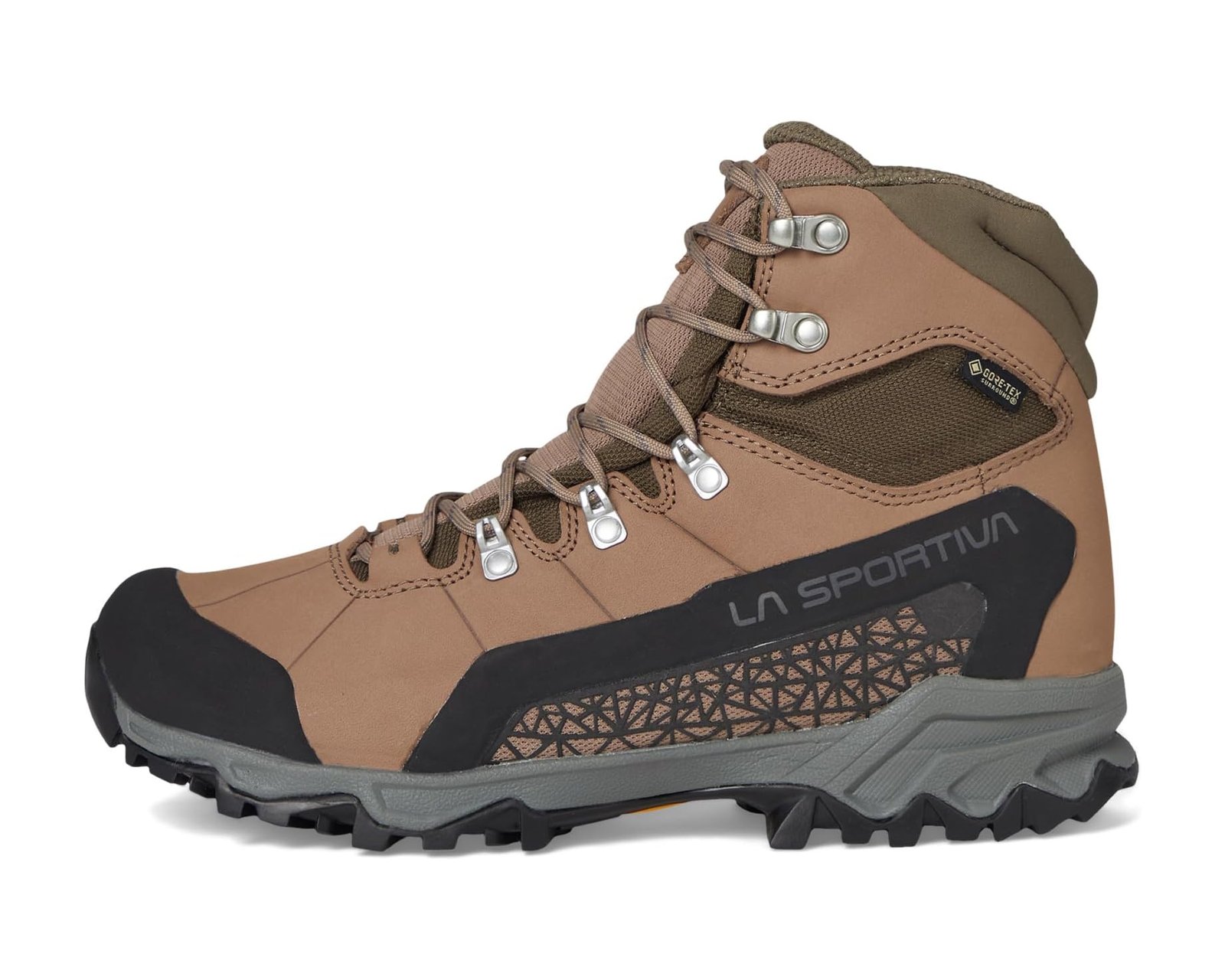
La Sportiva Nucleo High GTX
Check Price on Amazon → Check Price on Amazon →
– Available in D-width and 2E-width (rare for women’s!)
– Built on a naturally spacious last
– Excellent ankle support; stiff midsole
– Fully waterproof with Gore-Tex
– Break-in period: 3-5 hikes
– Price: $220-260
– Best for: All-terrain hiking, 6+ mile hikes, three-season use
KEEN Targhee III
Check Price on Amazon → Check Price on Amazon →
– Available in D-width
– Insanely roomy toe box
– Great for wide, high-volume feet
– Waterproof
– Price: $170-200
– Best for: Colder weather, wide volume feet, longer hikes
Lightweight Backpacking Boots (For Carrying Weight)
Once you’re comfortable, you might want boots for overnight trips or heavy packs.
Scarpa Kailash GTX Check Price on Amazon →
– Available in D-width
– Stiffer sole designed for pack support
– Excellent for rocky terrain
– Takes 5+ hikes to break in properly
– Price: $240-280
– Best for: Backpacking, mountain terrain, heavier loads
Part 3: Beginner Tips for Breaking In and Fitting Wide-Foot Hiking Boots

The Break-In Strategy (Not a Months-Long Ordeal)
🏅 The Break-In Strategy (Not a Months-Long Ordeal) — BroadToeBox Score
8.5
7.5
8.0
8.0
7.5
7.0
Don’t hike 10 miles on day one. Here’s the actual progression:
Week 1-2: Wear boots around your house and on short walks (1-2 miles). This molds the interior to your foot and reveals any true fit problems.
Hike 1: 2-3 miles on easy terrain. Stop immediately if you feel pressure (not soreness—pressure is a sign the boot is wrong).
Hikes 2-4: Gradually increase to 4-6 miles. Most boots should feel broken in by hike 4.
Hikes 5+: Go longer and steeper.
If you’re still getting hot spots or blisters after 5 hikes, the boot doesn’t fit properly. Return it.
Lacing Techniques for Wide Feet
🏅 Lacing Techniques for Wide Feet — BroadToeBox Score
0.0
0.0
0.0
0.0
0.0
0.0
Standard lacing amplifies pressure points. Try these adjustments:
For heel slipping: Tie the top two eyelets tighter than the rest. This pulls your heel back and down without crushing your midfoot.
For wide midfoot pressure: Skip the second eyelet from the top entirely. This reduces pressure across the widest part of your foot.
For overall comfort: Use the “Runner’s Loop” (also called “heel lock”)—create a small loop at the top eyelet and thread the laces through it before tying. This prevents heel rise without tightening the entire boot.
Socks and Insoles Matter
Wide feet need thick, well-cushioned hiking socks. Merino wool or wool blends prevent blisters better than synthetics.
Budget brands that work: Darn Tough or Smartwool.
Many wide-footed beginners benefit from aftermarket insoles with arch support. Superfeet or Powerstep insoles ($30-50) can transform a good-fitting boot into a great one by adding support to your arch and stabilizing your foot inside the boot.
Part 4: Common Mistakes Beginners Make (Avoid These)
Mistake 1: “We’ll Just Go Up a Size”
Going up a full size when you wear a D-width is tempting. But a larger boot doesn’t solve width problems—it creates heel slip, which causes blisters and black toenails. You end up with more problems, not fewer.
Fix: Buy the correct width in your true size. It’s worth the search.
Mistake 2: Ignoring Heel Lock
Heel slip feels like the boot is “just loose.” You think it’ll tighten with break-in. It won’t. A half-inch of heel movement—even felt barely—creates blisters within 3-4 miles.
Fix: Test heel lock before you buy. Press your foot forward in the boot. Your heel should stay planted.
Mistake 3: Accepting Initial Pressure Points
Many beginners think foot pain is part of “breaking in” boots. It’s not. Pressure that feels sharp or concentrated on day one will become painful blisters by mile 6.
Fix: If you feel a pressure point while trying on boots, try a different brand or size. Break-in soreness is normal (your foot adjusting to a stiff sole). Pressure points are not.
Mistake 4: Not Testing on Terrain
Hiking boots feel different on flat store floors than on rocky trails or uneven ground. If possible, ask the retailer if you can wear boots for 30 minutes that includes some stairs or a small outdoor area.
Fix: Retailers like REI allow 30-day returns. Use that window to test boots on actual trails. Return them if they don’t feel right by hike 3.
Our Recommendations: Best First Hiking Boots for Women with Wide Feet
For Short Day Hikes (Under 5 Miles):
Merrell Moab 2 Vent Check Price on Amazon → — $110-140
Why: Comfortable immediately, wide toe box, affordable. Perfect first boot for testing if you enjoy hiking before investing in stiffer boots.
For Mixed Terrain & Longer Days (5-10 Miles):
La Sportiva Nucleo High GTX Check Price on Amazon → — $220-260
Why: True wide options in both D and 2E widths, excellent support, waterproof, versatile enough for 90% of hiking situations. This is the boot We recommend most to wide-footed beginners.
For Very Wide Feet & Maximum Comfort:
Keen Targhee III Check Price on Amazon → — $170-200
Why: Roomiest toe box of any hiking boot. If you have high-volume wide feet or bunions, this is the most comfortable option. The tradeoff is less ankle support, so stick to easier terrain until you’re confident.
FAQ: Starting Hiking with Wide-Foot Boots
Q: Can I wear regular width boots if I tape Feet or use inserts?
A: No. Taping and inserts address arch support and stability—not width. A narrow boot will still compress your foot and cut off circulation, causing pain and numbness. You need actual width.
Q: How do We know if a boot is waterproof enough?
A: Look for Gore-Tex lining (the gold standard) or eVent. Tested waterproof boots keep your feet dry in creek crossings and heavy rain. Non-waterproof boots dry faster but offer no protection. For beginners, waterproof is worth the extra $30-40.
Q: Should I buy boots online or in person?
A: In person if possible. Wide feet need fit verification. If buying online, only order from retailers with 30-day returns (REI, Backcountry, Zappos). Try boots at home before committing.
Q: How long does a pair of hiking boots last?
A: 800-1,200 miles of hiking. For weekend hikers, that’s 2-3 years. Quality boots are worth the investment because poor-fitting boots stop you from hiking; good boots enable the hobby.
Q: Do I need two pairs of boots?
A: No, not starting out. One quality boot that fits is better than two mediocre boots. Add a second pair (maybe lighter weight) only after your first pair hits 500+ miles.