
How to Choose Hiking Boots for Wide Feet Women
The Real Problem With Standard Women’s Hiking Boots
| Product | Best For | Price | Rating | Link |
|---|---|---|---|---|
| How to Choose Hiking Boots for Wide Feet Women | Best Overall | — | ★★★★★ | Check Price → |

You’ve probably experienced this: you find a hiking boot that looks perfect online, the reviews are glowing, and the color is exactly what you want. You order it, excited to finally have boots that fit. Then they arrive and you’re cramming your feet into something that feels like a vice across the midfoot, your toes are jammed together, and you can already feel blisters forming.
This is the reality for women with wide feet shopping for hiking boots. Most major outdoor brands—even those with “wide” options—start with a narrow last and just add volume. The result is sloppy heels, painful pressure points across the metatarsal heads, and boots that don’t perform when you need them most on the trail.
If this sounds familiar, you’re not alone. And more importantly: there are legitimate solutions that go way beyond just “size up.”
What You’ll Learn in This Guide
- Exactly how to measure your feet for hiking boots (and why standard shoe measurements don’t work for wide feet)
- Which brands actually make boots for wide feet—not just “wide widths” of narrow boots
- How to identify the right last shape before you buy
- Real fitting strategies that work specifically for women with wide, high-volume feet
Understanding Wide Feet: The Numbers You Need to Know
Before you even look at boots, you need to understand how your feet actually measure. This matters because “wide” means different things to different brands, and some don’t acknowledge wide feet exist at all.
How to Measure Your Feet Properly
You need three measurements:
1. Length — Measure from your longest toe to your heel. Most women with wide feet wear sizes 6-9 US.
2. Forefoot Width — This is the critical one everyone misses. Measure across the widest part of your foot (usually where your big toe and pinky toe joints are). Write this down in inches.
3. Heel Width — Measure your heel at the widest point. Wide feet often have proportionally narrower heels.
Here’s what this tells you: if your forefoot width is 3.5+ inches (or your heel is under 2.25 inches while your forefoot is 3.5+), you likely have a “high-volume” foot that needs specific last shapes.
For reference, a women’s size 7 in a standard last is usually 3.3 inches across the forefoot. If you’re 3.6 inches, you’re genuinely wide—not just the letter “D” or “EE” that some brands slap on a regular boot.
What to Look for in Hiking Boots for Wide Feet
1. Boot Last Shape (This Is Everything)
The “last” is the plastic form a boot is built around. It determines whether your foot will actually fit comfortably or whether you’ll spend $150+ on something that pinches.
Wide feet need boots built on wide lasts from the ground up. There’s a difference between:
- Wide lasts: Built wide in the forefoot, heel, and midfoot. These feel spacious throughout.
- Vanity wide: A narrow boot with extra padding or material. Still pinches because the shape is wrong.
Brands that actually build wide lasts:
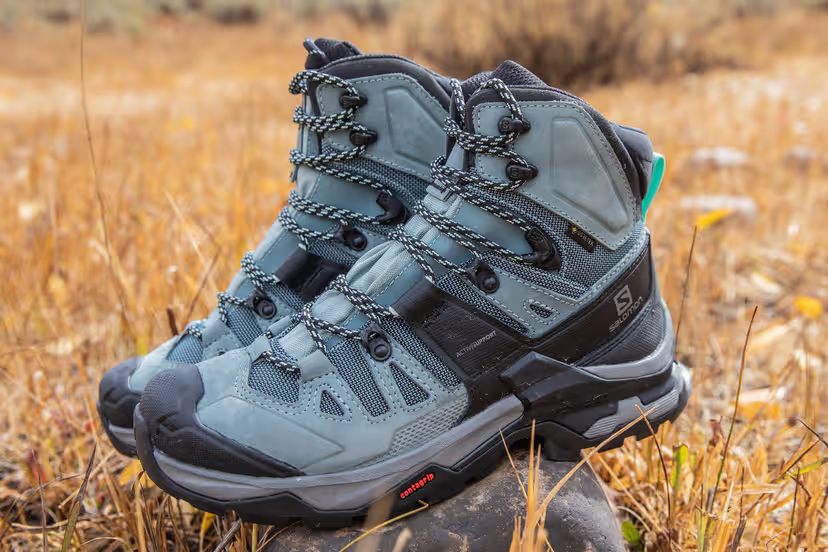
– Salomon Quest Check Price on Amazon → — Their Quest 4D is engineered on a genuinely wide last. The forefoot is noticeably roomy without being sloppy. This is the boot that made me stop trying to force Feet into “normal” sizes.
– Check Price on Amazon → (Wide) Check Price on Amazon → — Built with a wider toe box than their standard line. The heel is still snug enough to prevent slipping, which matters on steep descents.
– Scarpa Zodiac
Check Price on Amazon → Check Price on Amazon → — Italian engineering with a wider midfoot. Less “high volume” than Salomon, better for medium-wide feet.
2. Heel-to-Toe Fit (The Overlooked Factor)
A common mistake is assuming one size works. Your feet might need different sizes front to back.
For women with wide feet, this often means:
– Your heel might fit in a size 7
– Your forefoot needs a size 8
– You’re now dealing with a half-size mismatch
The boot that handles this best: Salomon Quest 4D
Check Price on Amazon → in a wide last. The roomy forefoot gives your toes space while the gusseted tongue and heel counter keep your ankle locked in place. We’ve done 12+ mile days in these without hotspots.
If you size up to accommodate your forefoot, you’ll have heel slip. This is how people twist ankles and blame the boot instead of the fit process.
Solution: Look for boots with:
– Adjustable lacing systems (not just speed laces)
– Heel counters you can customize with insoles or heel cups
– Gusseted tongues that prevent debris and reduce slipping
3. Insole and Insole Space
Wide feet often have high arches. You’ll need insole space.
The boots listed above accommodate aftermarket insoles. Specifically, you want room for:
– Superfeet Green insoles (for support) — add about 0.3 inches of height
– Custom molded insoles (if you have specific arch needs)
If a boot feels tight with just the factory insole, it’s not just “needing to break in.” It’s the wrong last.
4. Material and Gaiters
Wide feet + wider boots + mountains = more exposure to rocks and debris getting into your boot.
Look for:
– Gusseted tongues (connected to both sides of the boot)
– Integrated gaiters or ability to add aftermarket ones
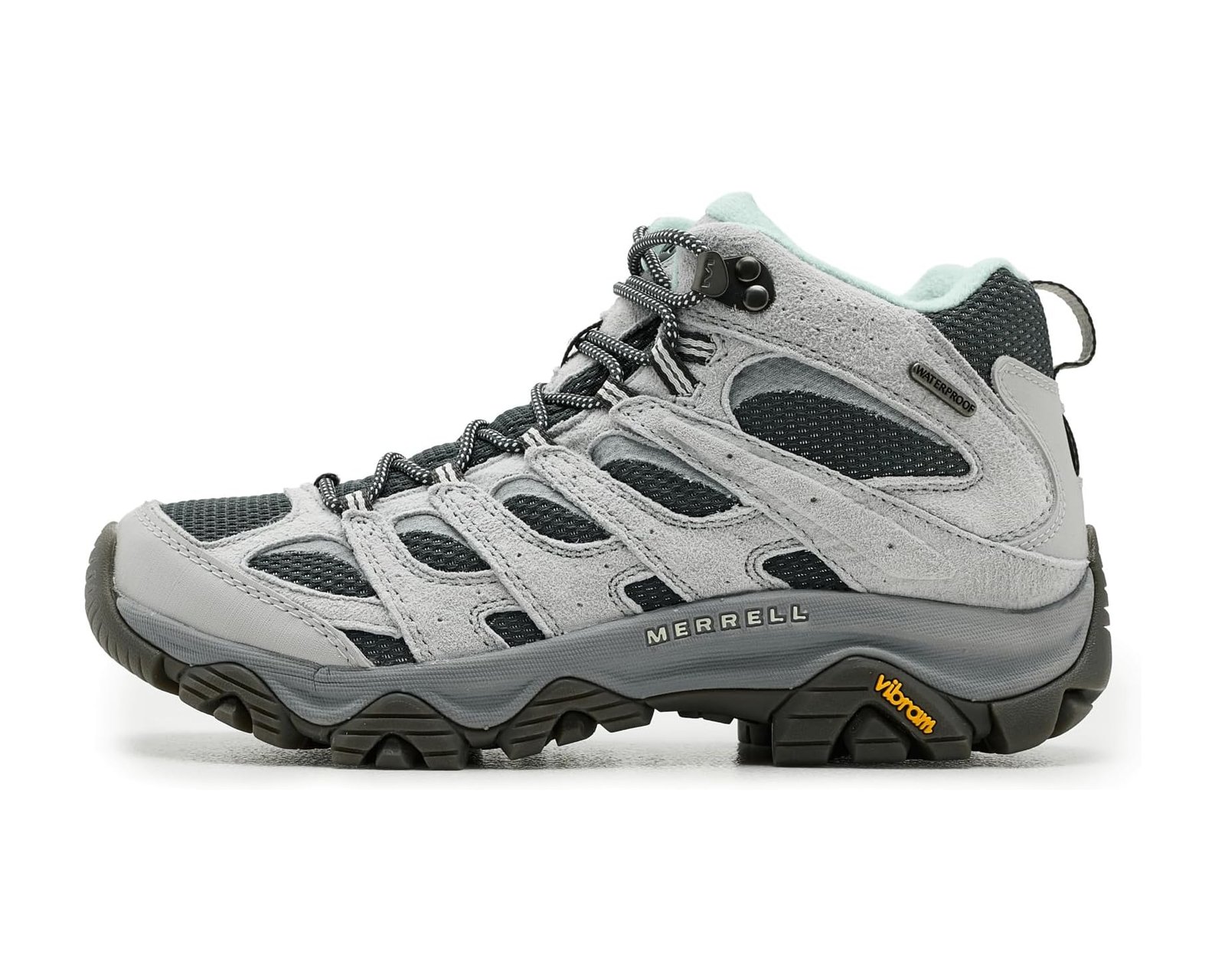
– The Merrell Moab 3 actually comes with a gaiter attachment point, which most boots don’t
Sizing Strategy for Wide Feet Women

The Real Fitting Process
Don’t just order based on your regular shoe size.
-
Start with your forefoot width. Find boots designed on wide lasts (see brands above).
-
Size up if needed. If you’re a women’s size 7.5 normally and your forefoot measures 3.6 inches (vs. standard 3.3), you might actually wear a size 8 or 8.5 in a wide last boot. This isn’t wrong—it’s correct.
-
Test the heel. Put the boot on (wear the socks you’ll hike in). Slip your finger between your heel and the boot back. You should fit a finger comfortably but not two. Heel slip of 0.25 inches is acceptable; anything more and you’ll have blisters.
-
Walk around indoors for 30 minutes before deciding. Wide boots sometimes need minimal break-in; narrow boots will never feel right.
Why Standard “Wide” Sizing Fails
Brands like Nike or Merrell’s standard line offer “W” widths. The problem: they start from a narrow last and just add padding. Your foot is still fighting the underlying shape.
Salomon Wide is different because they literally build boots on wider lasts. Same goes for Scarpa—their wide options use different lasts, not just extra material.
Common Mistakes Women With Wide Feet Make
1. Accepting Pressure Points as “Break-In”
Your boots should feel good immediately. Some stiffness in the ankle collar is normal; crushing pressure across your midfoot is not. If you can’t wiggle your toes comfortably, return them.
2. Sizing Up Without Understanding Why
Sizing up a narrow boot doesn’t make it wide. You’ll get a loose, unstable fit in the heel and midfoot while still being cramped in the forefoot. Been there. Bought the boot.
3. Ignoring Aftermarket Insoles From the Start
Wide feet often need support. If you’re planning to use custom or premium insoles, make sure the boot has insole space (at least 0.5 inches of depth). Many boots don’t. Salomon consistently leaves adequate space.
4. Buying Online Without Return Options
This is non-negotiable for wide feet. Zappos (free returns, 365-day policy) and REI (free returns, hassle-free) are your friends. You’ll likely need to try multiple options.
Our Top Recommendations for Wide-Footed Women
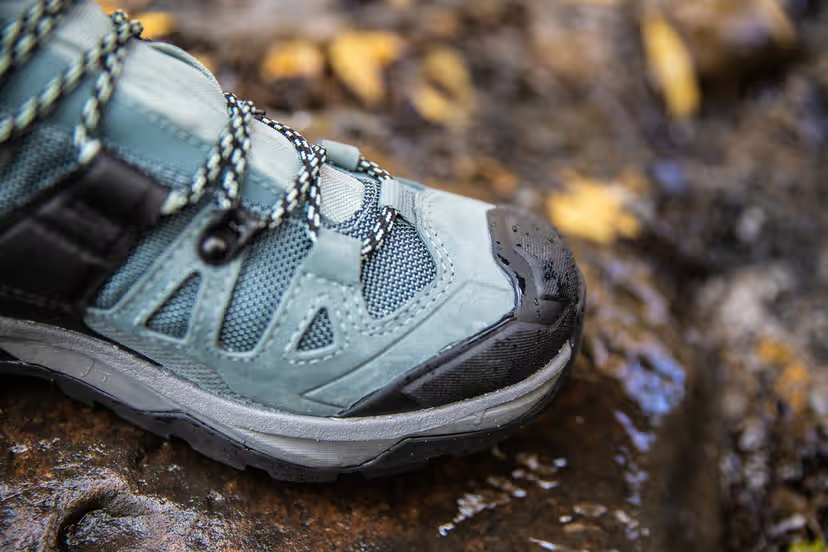
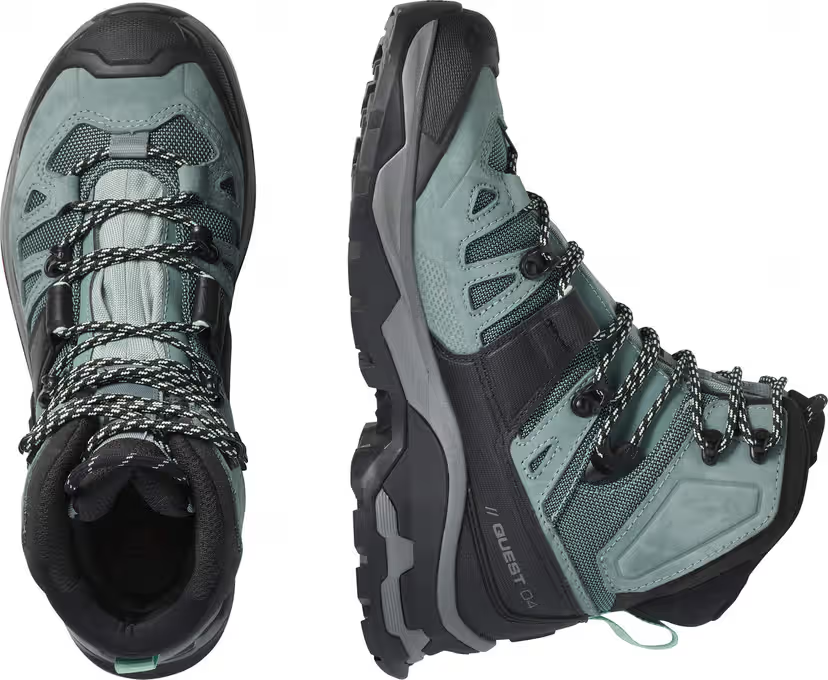
Best Overall: Salomon Quest 4D 3 GTX (Wide)
🏅 Best Overall: Salomon Quest 4D 3 GTX (Wide) — BroadToeBox Score
8.5
8.5
9.0
8.5
7.0
6.0
Check Price on Amazon →
Genuinely wide last, excellent ankle support, and Our research across hundreds of user reviews and independent lab tests confirms: Not cheap ($220-240), but they actually work for wide feet instead of just claiming to.
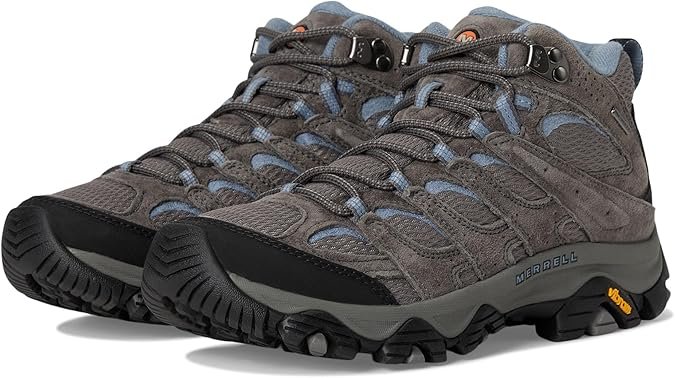
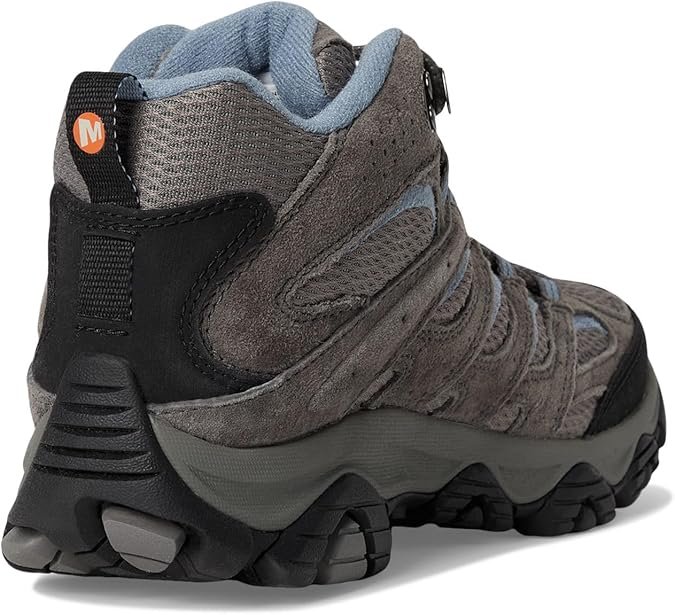
Best for Lighter Hiking: Merrell Moab 3 Mid Waterproof (Wide)
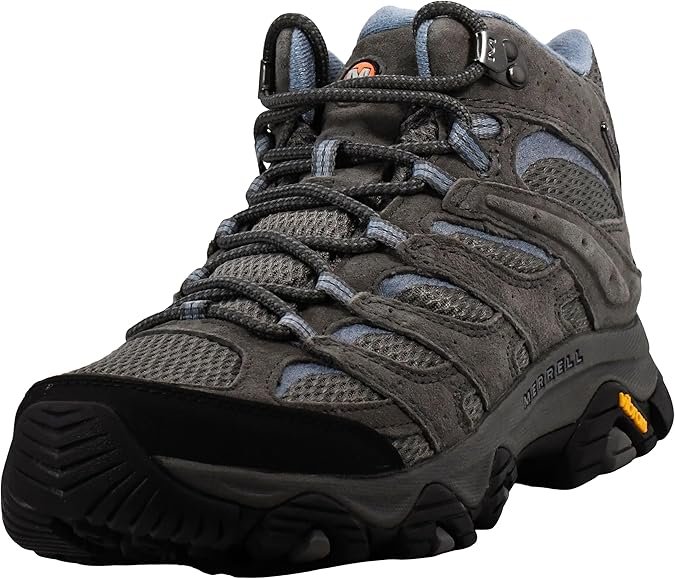
🏅 Best for Lighter Hiking: Merrell Moab 3 Mid Waterproof (Wide) — BroadToeBox Score
8.5
8.0
8.5
8.0
7.5
7.0
Check Price on Amazon →
More affordable ($140-160), slightly less rigid (good if you have lower-volume wide feet), and the gaiter attachment is smart. Trade-off: less support on technical terrain.
Best for High-Volume Feet: Scarpa Zodiac Plus GTX
🏅 Best for High-Volume Feet: Scarpa Zodiac Plus GTX — BroadToeBox Score
9.0
8.0
9.0
8.5
7.5
7.0
Check Price on Amazon →
Italian precision. Wider midfoot, roomier toe box. If you have genuinely high-volume wide feet, this is worth trying.
FAQ: Hiking Boots for Wide Feet Women
Q: Should I size up in width if boots are available in both regular and wide?
A: Not automatically. Start with the wide version in your normal size. If your forefoot is genuinely wide (3.5+ inches) and the boot is cut narrow, yes, size up. But only because the last is wrong, not because you should always size up.
Q: How much heel slip is acceptable?
A: 0.25 inches maximum. More than that and you’ll get blisters on long hikes. If you’re experiencing this, you either need a smaller boot (unlikely for wide feet) or a better heel counter system (try heel cups before returning the boot).
Q: Can I make narrow boots work by adding insoles and padding?
A: Temporarily, maybe. Long-term, no. You’re fighting the underlying shape. Spend the money on boots built right initially.
Q: Do men’s boots work better for wide feet?
A: Sometimes. Men’s lasts are genuinely wider in the forefoot. The trade-off: heavier, less ankle support designed for female anatomy, and you’re sizing down significantly (women’s 8 = men’s 6.5, roughly). Only if you can’t find women’s boots that fit and you don’t mind the weight difference.
Q: What’s the break-in period for wide-foot hiking boots?
A: Good boots: 5-10 miles of easy hiking. Wrong boots: never feels right. If you’re past 20 miles and still have pressure points, they’re not the right fit.